Showing posts with label narrative. Show all posts

Friday, September 26, 2025

Explore.org

I find CBS Sunday Morning to be my first step in calming any Sunday Scaries, and this week they presented a lovely story on the website explore.org, which provides a large variety of nature webcams. The founder explained that he feels passionate about connecting people to nature as a kind of mindfulness tool.

I agree with that, and have written about webcams before, but this week's Fat Bear Week is a good time to check in. Put that on your calendar if you missed it (you have until 9/30 this year), but it is a celebration of the bears preparing for hibernation at Katmai National Park, and having kids vote and justify their reason is a good therapy activity. 

I found this week with a number of learners that visiting explore.org was a good way to practice making choices, regulating through calming content, describing setting and action for narrative language, and tying into academic skills in science and geography. 


Tuesday, May 27, 2025

Lifetoon for story creation

Lifetoon is a fun entry in the range of generative AI tools being offered to us-- it creates a comic from your text/image of a character(s) and description of a story. It does require an image for character creation but you can just use a Googled image based on a character description. You can use yourself of course, but I would avoid uploading images of students into an AI.

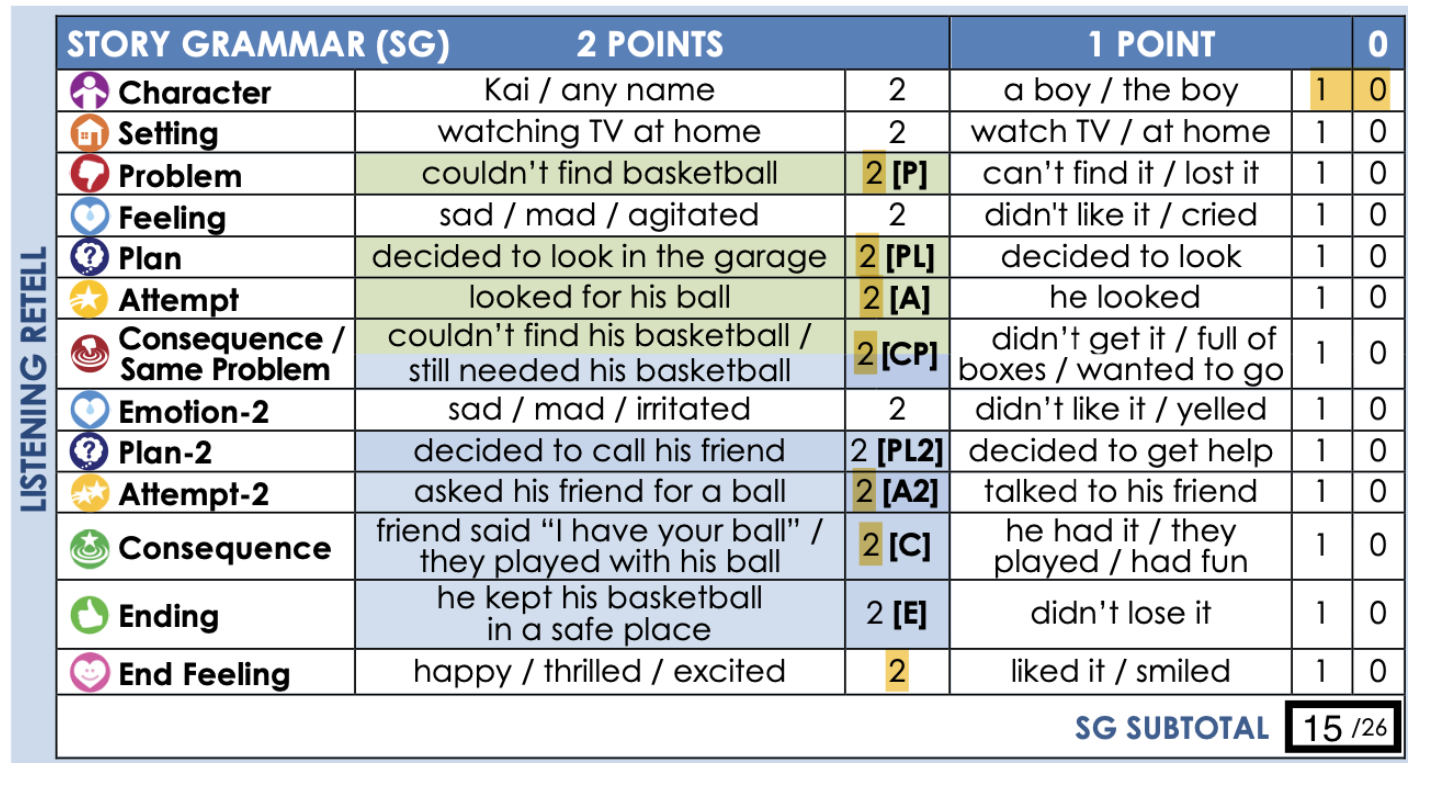
I very frequently use this very 70s personal narrative as a model for teaching a complete episode with Story Grammar Marker®. Yes, it's true- I once fell out of a moving car and my mom, driving, failed to notice. I ran this through Lifetoon and it did a fairly good job of rendering it as a comic! 


Lifetoon is a good tool to experiment with! Comics such as these could be useful for visualizing the plot of a chapter book or a historical event, curriculum concepts, social scripts and social or executive functioning problem solving situations.

Friday, November 1, 2024

"Here" and narrative interpretation opportunities

The movie Here comes out this week, reuniting Tom Hanks and Robin Wright with their Forrest Gump director Robert Zemekis. The movie is said to be experimental, with the camera fixed on one area to show a nonlinear story/stories that happen in a particular space across a broad range of time. Here is based on a comic and then graphic novel by Richard McGuire; both would be useful for reviewing with teens but the original comic is located, well, here. I could see this as useful for an activity in story mapping, BrainFraming (or other sequence graphic organizer), or timelining the events shown.


Friday, April 12, 2024

Create songs on a topic

Suno AI is a fun tool which will generate a song for you if you provide a simple prompt, such as a genre and topic. Sign in with your Google account and you can create a number of songs for free, and they are easily sharable by link. 

I first played around with Suno by musicalizing a funny story (at least funny to me and my friends). Last year when having a gathering to watch Eurovision, I had a full fridge of things for the party. My friends discovered that I had put (briefly) a defrosting ham for Mother’s Day the next day in a pan on a shelf below a table in the kitchen. So I’ve been teased since then about “floor ham.” I told Suno to “make a pop song about ham left on the floor.” That was the entire prompt, I didn't need to write any lyrics, but Suno has a custom mode where you can have more control over what ends up in the song.

Suno created this song. Seriously, it's a bop. I do apologize to any vegetarian readers.

Suno also created a fun song about nouns for me which I used with a student. The web or mobile version (just go to the website in your browser) will also display the lyrics to the song. Suno is a fun way to add engagement to any curriculum topic or to play with narrative language. 

Friday, January 19, 2024

What's the Hoopla?

Within sessions I strive to achieve what we might call media balance, using a variety of materials including hands-on, paper, and digital. If I feel the plan involves too much tech, I try to adjust. This has been a helpful model in supervising graduate students too. At the start of each semester, I encourage each of them to make sure they get a library card and visit the local library to practice identifying actual books they can use in therapy sessions. A library card is also essential for the resource I want to highlight here: hoopla!

hoopla is an extension of public libraries' digital resources (note: I speak as a Boston Public Library patron and this may not be available to all who read this- check with your library or their website!). Of course, Overdrive/Libby are great for digital books that sync to your Kindle app (I use on iPad or Mac), but I rediscovered hoopla entries recently when looking for books on my library's website. hoopla has a wide range of picture books, many on SEL topics from authors such as Julia Cook or Bryan Smith:


I have a learner who really gets into these books, posing great questions. Some SEL books can be a bit black and white, but with our teaching we can infuse nuance and neurodiversity-affirming approaches.

hoopla also has a range of short movies created from picture books, which can be terrific for media balance, engagement, and providing animation which creates narrative and interpretive opportunities.


I hope you find your way to hoopla!


Friday, September 29, 2023

Using ChatGPT for Lesson Planning Ideas

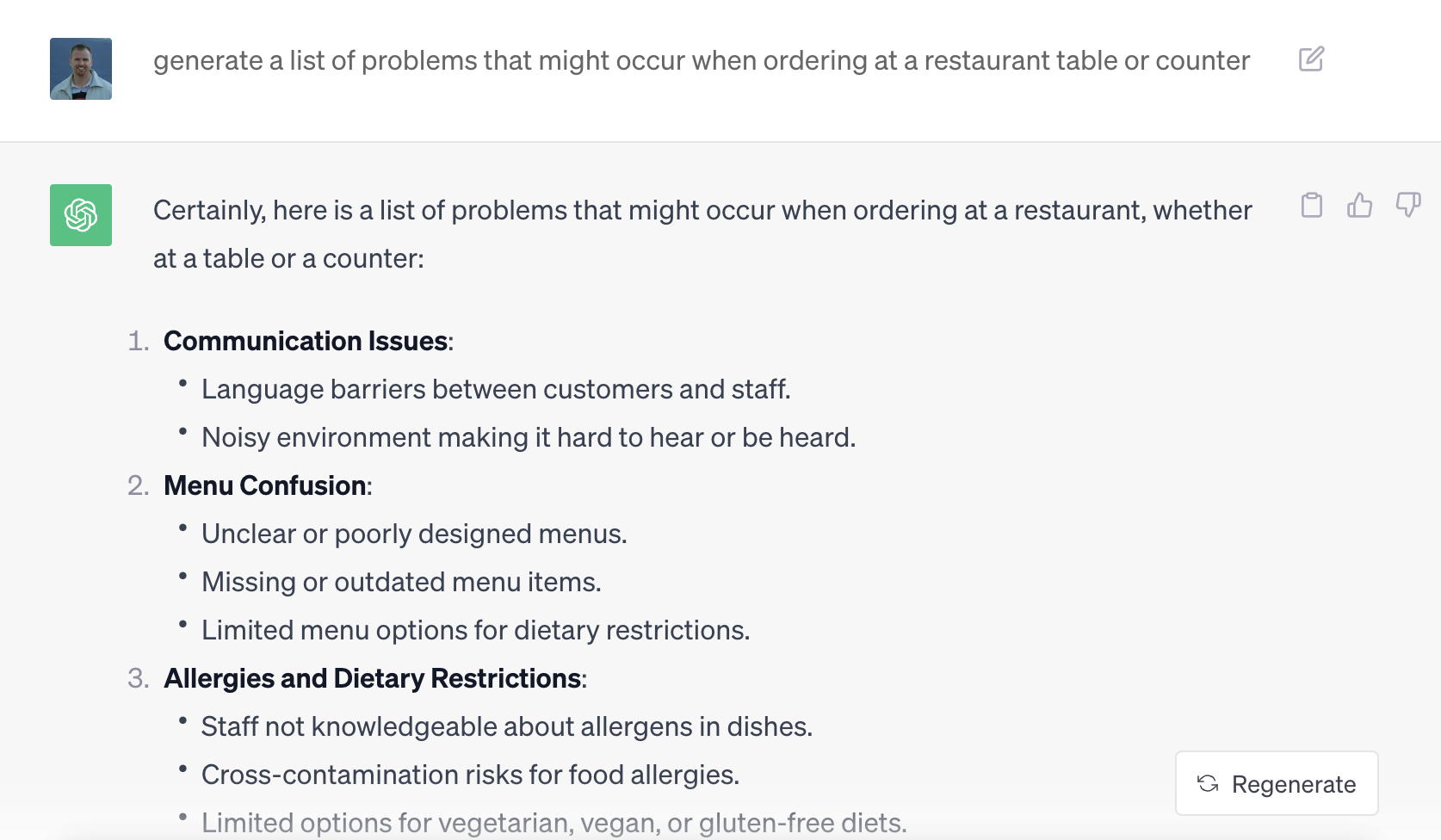
I have posted here recently on the therapeutic uses of Generative AI for language activities, and have recently been impressed by the results of using it to obtain modifiable content useful in sessions. ChatGPT is great at coming up with elaborated lists. I am working with a student on self-advocacy in the community, an an example prompt to ChatGPT is as follows:


Not necessarily usable as a read-through with a student, but certainly a place to start in thinking about role-playing situations. 

With another student, the need for intervention in social problem solving has been recently highlighted. The student benefits from a hook, and is very into the pop/rap artist Lil Nas X. While the artist's racy content would never be a good context for our work, the student is allowed to listen to some songs at home, and the artist could certainly be useful as a kind of shell of a story.  An activity I am conducting is teaching the basics of problem solving using language structures such as OR, i.e. "we could do this OR this." See the books on problem solving by Shure

Searching on Chat GPT, I originally obtained a list of too-mature problems e.g. Nas is harrassed on social media because of his identity as a queer artist. Modifying the prompt with "kid friendly," I received a delightful set of problem solving scenarios. 


Again, these are usable with some creative modification. The outfits scenario, for example, could be solved with a drawing activity of creating several outfits. My student is not so into drawing, so we are using Pic Collage's new online web editor (pick blank canvas) along with a separate tab search-copy-paste for Google Image PNGs (no background as in the rainbow skirt) and the "remove background" feature. 


We are doing a similar activity for a client I supervise who has a big interest in Sonic the Hedgehog!


Saturday, May 20, 2023

High quality digital resources for narrative assessment

I am just wrapping up another semester supervising graduate students at BU's Academic Speech, Language and Hearing Clinic. In gaining baseline and post-treatment data, I am always steering them to look through the narrative level at microstructure aspects (e.g. complex sentences). For several semesters, we've been using the excellent resources at Columbia University's Leaders Project and their School Aged Language Assessment (SLAM) cards. These are easy to use and provide a criterion-referenced measure as well as a good simple language sample. Digitally, these are also all available for free at Boom Learning (search for Leader's Project). I recently noted some versions for preschool students including stories for prediction, and look forward to trying these out. 

I am not sure why I am finding this image amusing. That's just me, I guess.

I did a recent assessment also where I incorporated the CUBED, which provides free language assessment measures including narrative-- these are from the team who created the Story Champs® program. CUBED materials have been created for PK-Grade 3 and consist of a paragraph-level verbally presented story and range of assessment activities (e.g. retell, vocabulary description, and personal narrative prompt). The forms of the CUBED make it simple to provide a view of story grammar and complex sentence formulation. 


Friday, November 11, 2022

Book Creator Templates (including Thanksgiving!)

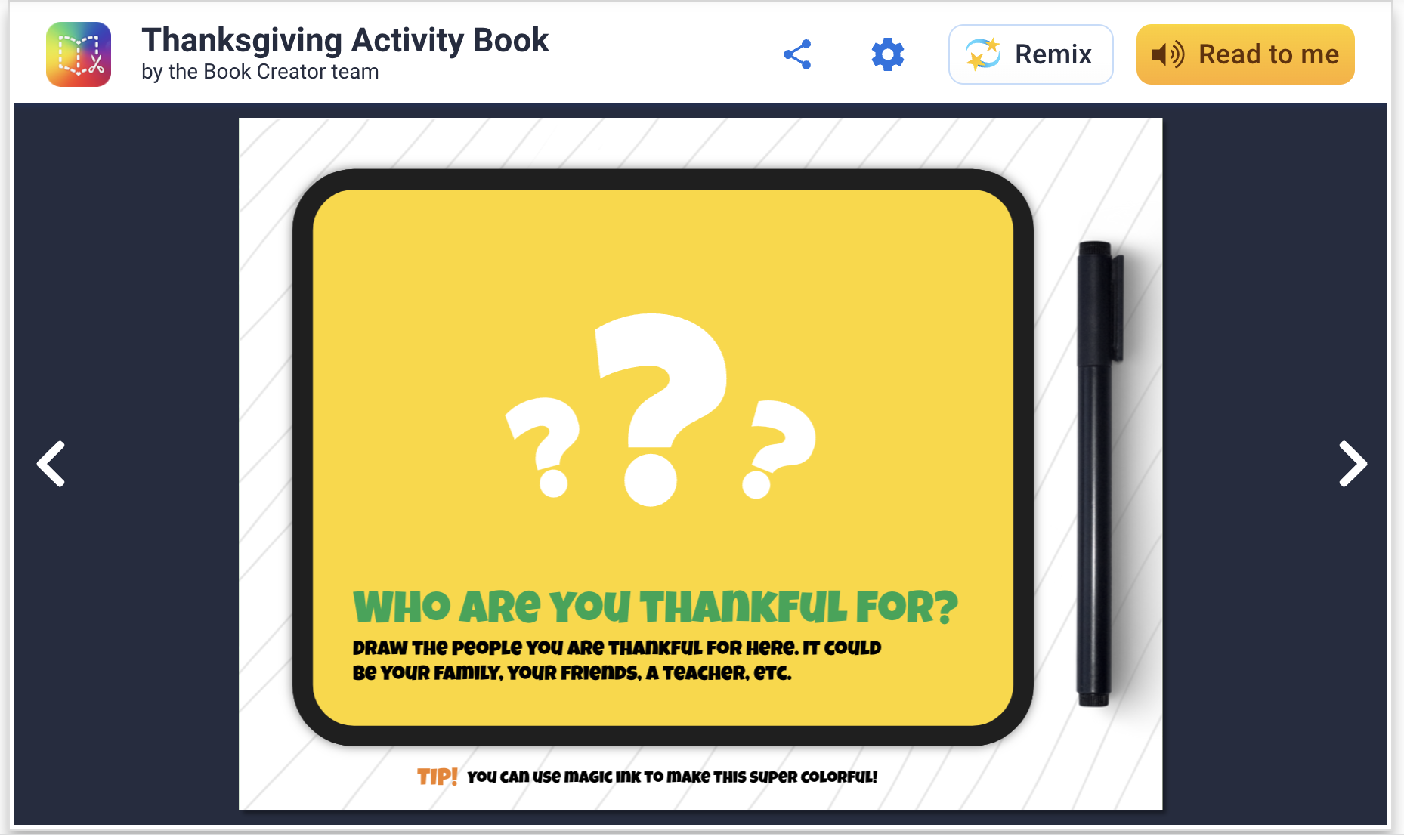
Book Creator has long been a stellar app/webtool and recently I discovered that they have templates to "remix." You can add templates to your app and do a collaborative work on your iPad among students, or if in a Chromebook environment your free account will allow you to share with students' Google accounts easily. This is an attractive option because, well, they are attractive and you don't have to design the book yourself. Richard Byrne describes the magic ink and autodraw features here.

These "activity books" are filled with language underpinnings like storytelling opportunities, semantic knowledge and vocabulary. You can easily copy and modify any page to cater to your students before starting the activity. For example, on this page below, you can zoom in on a map and have kids in the group find out where others live (generally) for spatial/academic/biographical knowledge of others. Additionally, with this template, gratitude is literally good for your brain to practice all year long.


Saturday, November 5, 2022

New Course Available!

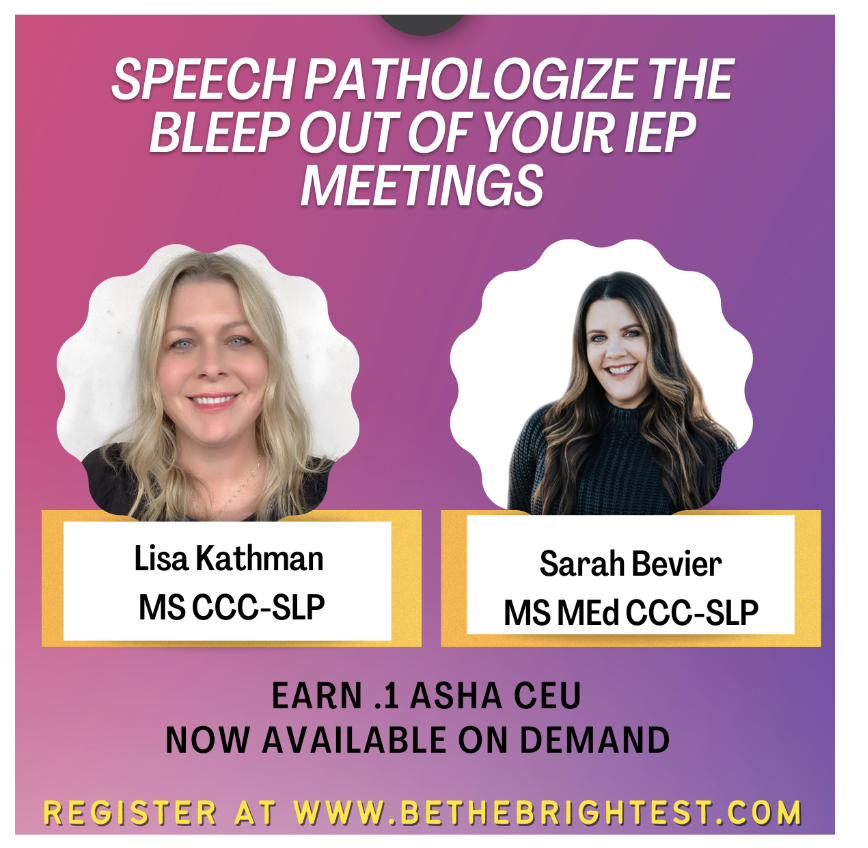
Hi everyone! In July I was honored to present at the SLP Summit. I’ve expanded on that content and have a new 1.5 hr on-demand course available for you to earn more CEUs! We know one hour isn’t always enough so this is a chance to dive deeper into some fun, new content. 

Check it out now at www.bethebrightest.com.

See what others said about my last course:

 “Amazing & inspiring!! I came away with tons of ideas to use in therapy that my kids will love! Thank you!!”

 “EXCELLENT COURSE! Jam packed! Thank you!!”

 “Excellent presenter! Terrific demonstration of the different tech tools available for narration, not just providing links, but describing their use and demo'ing how to use them.”

 “Loved all the practical ideas given. Even though I have used some of these tools, I still learned so many new things and features.”

And that’s not all! Need more CEUs? The course below is also now available for free!


Friday, October 28, 2022

Monday Halloween?

Looking for an engaging activity this Monday? Check out this fun one from Control-Alt-Achieve (also a great resource in general). In this you use Google Docs as a visual creator to make a Halloween "Rebus" story. I have mentioned before the principal that typing into a white space is a visual support for language formulation and (many of) your students will be engaged by it- tech integration need not always be super interactive or fancy! This activity integrates the use of emoji and don't miss the way expanded context provided by going to what is now available as Insert>Emoji. How fun! I did this activity with several middle school groups this week and they were super-engaged. In addition to targeting some story grammar, complex sentences or vocabulary, I integrated the work described in this ASHA article to make this an improv game focusing on conversation building and flexibility. Note: I always accompany some encouragement of "yes, and" with neurodiversity- and human-affirming takes on "it's also ok to say no."

It doesn't have to make total sense, haha. In another group, a kiddo told me he hated this font, lol. So we changed it, easy enough! 


Friday, June 10, 2022

SLAM Card resources for narrative language assessment

While supervising this semester at Boston University, I was informed about the resources available through the Leaders Project at Columbia University for narrative language sampling. The School Age Language Assessment Measures (SLAM) materials are a series of story cards and questions with rubrics that are all FREE. We used them for baseline assessments and I recently used them in an evaluation, and found they gathered helpful data in all cases. The page linked above provides links to all sets (in some cases just a 1-card resource) and guidelines for use. 

A few tech-related spins:

-Also linked above are BOOM! cards for each set which can be used in teletherapy or perhaps in person. 

-I have at times modified visual assessments such as these for a tech format, either for teletherapy or to reduce the amount of materials I am toting around. For example, I screenshot the Lost Cellphone cards and placed them onto a Keynote (can do the same with PowerPoint or Google Slides) slide to have a student click-drag to sequence and interact with the cards.

Friday, May 13, 2022

Dino Tracker

Dino Tracker is a fictionalized interactive website that has been released as a promotion for Jurassic World Dominion, an upcoming film in the series. The premise of this film is that dinosaurs are no longer confined to Isla Nublar but living (and hunting) alongside humans. The purpose of the site is ostensibly to provide information to the public about "sightings" of various dinosaurs- the therapeutic potential in the site is scaffolding language around the locations (through a clickable Google-like map), the "descriptions" of the dinosaurs and cause-effect language of "Dos" and "Do Nots."


I was recently discussing with a colleague how high school students often have remaining difficulty with the geographic literacy aspects of continent-country-state or other division and how this connects to situational awareness and the ability to digest information about the world and current events. Browsing the world map provided could be an exciting (MS and HS students who can understand the artifice of the content) opportunity to review continents and some of the spatial strategies for recalling them, then moving down to more micro areas. The videos provided are a form of narrative and the "field report" expository text that can be mapped with graphic organizers, or used as a model to tell "same but different" creative item e.g. a report from another location.  Overall Dino Tracker represents how interactive websites designed for very different purposes can provide access to academic language- one strategy I like is to search for "interactive websites" and under tools set the time limit to the past month or week, you can find some gems.

Friday, May 6, 2022

LearnHip

LearnHip has some useful and simple activities designed for English language learners but also useful for speech and language therapy. It may be particularly useful as a warm-up or to make use of a short amount of extra time in a session. Some of the activities it includes: makers such as a scrambled sentence, reveal the picture and board game creator, conversation cards on a wide variety of themes (e.g. annoyances), and story cards and silly/engaging contexts such as describe the picture and what happens next (in the form of GIFs) "quizzes." Go Hip would be good to have in your bookmarks for classroom, group or teletherapy sessions for a variety of verbal expression objectives.


Sunday, May 1, 2022

Simple visual engagement resources for youngsters

Whether doing tele- or in-person therapy, you should be aware of the cute, simple and useful resources of Dr.  Karen Fried at Oaklander training, such as the online sand tray and dollhouse interactive activities on the site (go to the tools and resources tab). There's apparently a whole approach to using these tools as psychological therapy with young children, but as a sort of stickerbook they have specific linguistic opportunities. Consider vocabulary, concepts, syntactic expansion, and storytelling!

Thursday, March 10, 2022

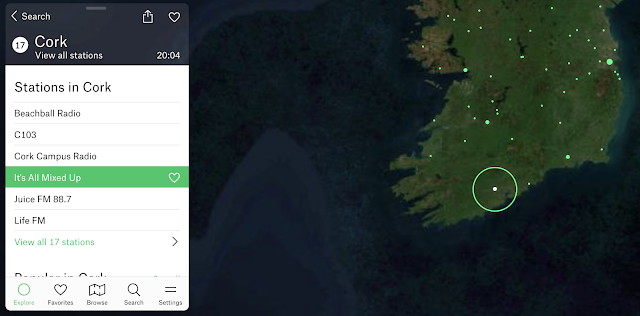
Radio Garden

Flowing a bit from my last post (context is your friend), Google Experiment Radio Garden is worth a therapeutic visit. Your students will think it's just a chill moment, but secretly it can be a great way to practice having them call out:

-Continents and then countries
-Responses (conversation/comments) to what they hear
-Characterization of the language (nonverbal aspects such as tone etc) and type of music you may hear. Music genres are a category and can connect us with peers!

Why not pair this with looking up a current event from the country you "visit" for narrative/expository comprehension? 

Now more than ever, it's important to foster global awareness.

Oh, and Happy St. Patrick's Day, here's my homeland:


Friday, November 26, 2021

ASHA Wrapup

ASHA Convention was different, but it happened! Thanks to all the organizers for providing a safe and very educational event. I was honored to present on Thursday to a great in-person crowd. 

The focus of the session was on "playful" activities for language and social interventions across the age levels.

A few resources I presented:


Improv games are supported in our literature and mirror the format and communicative behaviors of conversation. Be sure to teach the nuance of "yes, and..." and couple with lessons on when we say no, and that it is OK to disagree (avoid ableism and support neurodiversity)..


Books are their own therapy tool and give you great ideas for playful followups. In this case Spencer's New Pet gives lots of opportunity for nonverbal situational interpretation and narrative development. (see this post for tips on using Youtube to present picture books). Balloon Animals! app made a nice pairing for a playful post activity here, following a quick lesson to pre-load some social strategies. See my free booklet on Pairing Picture Books with Apps!


You can use game contexts (e.g. Minecraft, Pokemon) without ever actually playing those games. A recent example: I have been leveraging a student's interest in Pokemon to use Pokemon Adventure comics (available via my public library on Overdrive which exports to the Kindle app) for nonverbal and emotional interpretation, narrative retell, and identifying and working with vocabulary. The vocabulary words need not be in the text to be relevant and motivating!

Hope you all had a great Thanksgiving!

Friday, October 15, 2021

Consider This: Civics!

Consider This has mostly been an exploration of resources used a bunch of different ways, but we also can consider how different curriculum topics can be used to target many speech and language and social communication objectives (and in this case, some resources that go with this idea). Speech and language pathologists can wrap interventions in contexts; check out this recent study, one that I'd like to describe in detail at some point, on science and Tier 2 vocabulary.

I think of civics as important world and social knowledge. Though it's unlikely to fix everything, we could do worse than helping students understand how government and laws work. Within civics contexts, there's much opportunity to target narrative, expository language, reading comprehension, vocabulary, and sentence formulation.

Years ago, Social Thinking® recommended Munro Leaf's (quite old) picture book Fair Play, which in its opening pages explores social norms in terms of moving from why we don't all get to do everything we want to do to why we have government. There are also several vignettes about a character he calls JustMe who behaves without considering others's needs that Social Thinking® formulated into a concept around JustMe vs Thinking about Others. We want to handle this topic with nuance and acknowledgement that everyone has JustMe "moments" to model the concept carefully, of course. The book is hard to find, but there is a read aloud version below. Skip the weird intro, consider handling the JustMe vignettes with further nuance, e.g. what the kids could have done to help JustMe be part of the group, and avoid the latter parts which are just way too harsh! I have generally used just up to about 4:30


In a much more straightforward way, iCivics remains a very useful tool. Sign in as a teacher and you can access lesson plans, worksheets, and of course the interactive games (varying in length, so explore) which can open up great expository conversations and vocabulary development. Sign-in also allows you to save games and pick up in later sessions. Recently I used Cast Your Vote with some students to explore the local election process and vocabulary like infrastructure, juvenile, enrollment, and minimum wage


Fablevision's Civics! An American Musical (free with signup) will delight fans of Hamilton and engages students in civics topics while targeting comprehension of primary sources. The language underpinnings, however, include situational interpretation of pictures and comprehension of texts. The game contains multiple paths you can return and reroute to (e.g. making a few musicals about a few different topics, if you have a group that gets into it), and again, saves your progress.


Civics topics are also great to explore with very simple resources such as newsela!

Interested in professional development for your department, school, or organization? Sean is booking in-person or remote trainings for the 2021-2022 school year

Friday, October 1, 2021

Consider This: Classtools.net

The V in the FIVES criteria is for Visual! Visual supports are a simple Evidence Based Practice- give students something to explore with their eyes and you can tap:

-description/main idea
-vocabulary
-narrative language and complex sentence formulation
-social/situational awareness
-their interests/humor!

Classtools.net is an oldie but goodie, and has been around forever. In addition to its classroom tools such as Random Name Picker, a simple Soundboard and such, there are many visual activities you can use to create an "opener" or have students create something themselves. This may be particularly useful for older students.

Consider These:

Twister: create a "tweet" from any character, tap main idea, perspective taking, sentence formulation

Image Labelling Tool: upload an image and create text "hotspots" for part/whole thinking, abstract or advanced categories, description

Breaking News and Headline Generators: main idea of a narrative or expository topic, with humor!

Image Reveal: Gameify "Thinking with the eyes"


Interested in professional development for your department, school, or organization? Sean is booking in-person or remote trainings for the 2021-2022 school year


Friday, September 10, 2021

Consider This: Visual electronic books on EPIC!

I'm sick of talking about COVID. Obvi it's still with us, but I thought I'd frame the path forward instead of backward, and 6 parts of "Lessons from COVID" was enough anyway. A new school year, so Consider This. In coming posts I will be encouraging flexible thinking, planning, and contextualizing of language interventions fostered by simple tech resources. 

I'm still a working clinician of course but have the privilege of doing consulting as well. This week I was discussing with an amazing SLP colleague a "way forward" for social learning lessons for a group of moderate to high-support high-schoolers. With delivery in their dedicated classroom, use of the board and projector is really helpful for keeping up engagement. We had at our fingertips a book she had identified, 125 True Stories of Amazing Animal Friendships, a great visual resource from National Geographic.


Interactive read-alouds, though still effective, get tougher as students get older. They no longer gather around in a circle on the carpet, do they? We thought of digitizing through Slides (easy enough, and one option), but then I thought to check EPIC! It had the book! Hopefully you know this repository of digital books offers (still!) free accounts to educators. Consider also this entire publisher's library and other visual treasures, which help us see how a resource like this can be useful beyond the primary grades.

Yes, you can zoom in...

So Consider This, in brief, and comment with other thoughts, please!
-Each entry, and there are many, can be mapped as a narrative
-The book as a whole is also an expository example and graphic organizers can be used for list, sequence, cause-effect etc.
-Our primary interest here was social "same but different" thinking. Many of these episodes can be used to extract human friendship "hidden rules" 
-Conversation building: what connections can you make in your experiences with pets?
-EPIC is very vocab-friendly. Click on a word and you get a definition.


What other ideas do you have when you Consider This?

Thursday, August 19, 2021

Lessons from COVID, part 6: (e-)Books are more useful than ever!

Picture (or other) books as an excellent therapy tool has always been one of my themes. In this post/video I demonstrate how to use Overdrive, which is one option for obtaining free e-books using your public library access. The tools here can be useful for tele-, individual, small group or classroom-based therapy. 

Check out the video here: 


.