Within sessions I strive to achieve what we might call media balance, using a variety of materials including hands-on, paper, and digital. If I feel the plan involves too much tech, I try to adjust. This has been a helpful model in supervising graduate students too. At the start of each semester, I encourage each of them to make sure they get a library card and visit the local library to practice identifying actual books they can use in therapy sessions. A library card is also essential for the resource I want to highlight here: hoopla!
hoopla is an extension of public libraries' digital resources (note: I speak as a Boston Public Library patron and this may not be available to all who read this- check with your library or their website!). Of course, Overdrive/Libby are great for digital books that sync to your Kindle app (I use on iPad or Mac), but I rediscovered hoopla entries recently when looking for books on my library's website. hoopla has a wide range of picture books, many on SEL topics from authors such as Julia Cook or Bryan Smith:
I have a learner who really gets into these books, posing great questions. Some SEL books can be a bit black and white, but with our teaching we can infuse nuance and neurodiversity-affirming approaches.
hoopla also has a range of short movies created from picture books, which can be terrific for media balance, engagement, and providing animation which creates narrative and interpretive opportunities.
I have been doing clinical supervision at BU for a few semesters now. It's such a rewarding experience to work with the graduate students in their first clinical in-house experiences. I have a student who is working on a lot of semantics and language-based literacy activities with her client, including teaching story grammar as an organizational structure. We have been talking about building activities in context with pre-book and post-book activities, and her client is interested in planes and aviation. I suggested to her this book and this activity: what 10 words do you think ChatGPT will come up with that go with ___ (in this case, airport). The process of asking them to predict what the AI may say is an associative activity, and then the results will likely bring about new concepts and vocabulary.
Well, besides the Jeopardescapade, this has been quite a crappy month for everyone. In Massachusetts, a huge surge in COVID infections after the holidays forced a lot of us to make changes again in how we are working with students. Schools have stayed pretty much as "new normal" here, with the exception of more testing and quicker on the draw to cancel school days for weather. Working in a private practice, we have made a shift to move as many sessions as possible into a temporary telepractice format for individuals and groups, while keeping in-person services for those that struggle to engage online (or are just over it). Of course we are taking extensive precautions: vaccine requirements, temp checks, health screens, powerful air filtration, double masking, distancing...
On that last one, I find technology to be a big help. We have an Apple TV (old ones work fine) with HDMI-ported TVs (just your basic TVs these days) in each clinic room. I have a Mac which can screen mirror to these, but if I didn't, an HDMI cable would do. The Mac just gives me more mobility. The use of a screen (like you would a board/projector in a classroom) can keep engagement up visually and can prompt session structure and communication from students in a variety of ways, while maintaining distance within the room. It can help also to reduce or eliminate shared "touched" materials, and though these really aren't the problem with an aerosol-spread virus, it's a step that can't hurt and can be reassuring to families. Here are a few examples:
-Activities students can participate in actively via their smartphones. You can make a worksheet/thinksheet into a google form and email to them, or shorten the link with bit.ly. Kahoot is almost always a draw, whether you choose from topics of interest or social/language based games. Jackbox Games are worth an investment, and often on sale- these are joined by phone.
-Have a discussion and document the language in a simple Google slide like a flipchart. I guarantee they'll want to correct your typing, which means they are paying attention. Insert images! SlidesCarnival has good templates for free if you want to jazz it up visually.
-Anything visual that prompts discussion- consider infographics on topics of interest or something related to holidays or current events. With Chinese New Year coming up there are a variety of websites and graphics that describe the personality traits of the various animals/years. Great to connect to and have students self-reflect on how they might be same or different.
-Books that are visual with limited text. This week I used Jon Klassen's darkly humorous I Want My Hat Back and This is Not My Hat on YouTube. You read 'em, sound muted, pause at will- there is plenty to discuss with some facial expression interpretation.
I'm sick of talking about COVID. Obvi it's still with us, but I thought I'd frame the path forward instead of backward, and 6 parts of "Lessons from COVID" was enough anyway. A new school year, so Consider This. In coming posts I will be encouraging flexible thinking, planning, and contextualizing of language interventions fostered by simple tech resources.
I'm still a working clinician of course but have the privilege of doing consulting as well. This week I was discussing with an amazing SLP colleague a "way forward" for social learning lessons for a group of moderate to high-support high-schoolers. With delivery in their dedicated classroom, use of the board and projector is really helpful for keeping up engagement. We had at our fingertips a book she had identified, 125 True Stories of Amazing Animal Friendships, a great visual resource from National Geographic.
Interactive read-alouds, though still effective, get tougher as students get older. They no longer gather around in a circle on the carpet, do they? We thought of digitizing through Slides (easy enough, and one option), but then I thought to check EPIC! It had the book! Hopefully you know this repository of digital books offers (still!) free accounts to educators. Consider also this entire publisher's library and other visual treasures, which help us see how a resource like this can be useful beyond the primary grades.
Yes, you can zoom in...
So Consider This, in brief, and comment with other thoughts, please!
-Each entry, and there are many, can be mapped as a narrative
-The book as a whole is also an expository example and graphic organizers can be used for list, sequence, cause-effect etc.
-Our primary interest here was social "same but different" thinking. Many of these episodes can be used to extract human friendship "hidden rules"
-Conversation building: what connections can you make in your experiences with pets?
-EPIC is very vocab-friendly. Click on a word and you get a definition.
What other ideas do you have when you Consider This?
Picture (or other) books as an excellent therapy tool has always been one of my themes. In this post/video I demonstrate how to use Overdrive, which is one option for obtaining free e-books using your public library access. The tools here can be useful for tele-, individual, small group or classroom-based therapy.
As I have, for now, continued to be doing mostly teletherapy for the past YEAR (that anniversary has been painful, so apologies for the quiet blog), I have found picture books invaluable. Pssst...shhh...largely any picture book you might want has a YouTube read aloud.
One strategy I use is to evaluate what's there, as often several are available. I prefer those that look more slide-show than a person with a book, and also tend to avoid videos with too much zooming. Going full-screen with the video by clicking the lower right icon is helpful.
This facilitates the second strategy- YOU read it aloud. This allows you to pace, pause, and interact with your students (e.g. model think alouds, direct their attention toward illustrations that foster inferences, use questions...). Turn that video sound right off!
So, for example, take How to Catch a Leprechaun by Wallace and Elkerton. This duo's series about catching various creatures has given me a ton of mileage with one particular group. They are not at all game for too-structured conversation, but keep it naturalistic with rich illustrations that have "things to say" that are not described in the text, and they talk! This one may help you in the coming week. There are a number of read-alouds of this book that you can compare to the simple one by PV Storytime. Search the book on YouTube to see what I mean.
There's also the handy The Night Before St. Patrick's Day you can use to do a topic study. Jamboard would be great for constructing Leprechaun Traps, see Julia Dweck's fantastic Rube Goldberg Jam as an example of what's possible (and all her great, very useful work on her LinkTree). EDIT- Julia has just added a fantastic How to Catch a Leprechaun Jam that would be a great post activity for the above book.
I have previously mentioned I am a big fan of the Scaredy Squirrel (Melanie Watt) series that is helpfully available on EPIC! Books. Over a number of weeks I had my students in one group come to a decision on the order of reviewing and discussing the books in the series, which was good practice in expressing opinions and compromise. They find the books hilarious, so they are motivating (see the above link for some social cognitive analysis as well). I wanted to share a post-activity we conducted with the original book. Hoggan and Strong describe how narrative teaching activities can include "art" activities, which was what this was in essence.
In the book, Squirrel is described as having constructed an emergency kit for all the unlikely things he is afraid of. So, as a group we created and shared emergency kits.
Here are the steps I followed:
1. Create a Google Slides presentation (and blank slide)
2. Use Insert>Image>Search the web to locate a "bag" for the kit, position and enlarge on slide.
3. Duplicate that slide for all in group (secondary click/right click on slide and select Duplicate). I put a text initial on each slide for each group member. Also click Share and make the presentation editable for anyone with the link.
4. Create a model (always), with same steps but using PNG in the search term which gives you transparent images (will look like they are over the bag, but this step is not necessary).
5. Present the activity and model and strong causals: I need iced coffee in the kit because I get Blue Zone in the afternoon. Also model how to insert an image or PNG (This provides good opportunity for following directions)
6. Copy the link and provide to group members in chat for the session (Zoom or Meet). Again, following directions.
Here was one of the students' productions:
7. Have all work independently while chatting and then share. This is a good opportunity to use a clock, Sarah Ward/Kristen Jacobsen style, for time management.
Overall the activity provides great self-description opportunities, building of "people files" (Social Thinking®) and conversation.
I've long been a fan of the contextual approach described by Hoggan & Strong in their influential article The Magic of Once Upon A Time-- that of pairing a picture book with pre- during- and post- narrative/language teaching opportunties. I have been presenting about this with many iterations for years, and last year published a pamphlet about it (free) on Teachers Pay Teachers.
We can consider "apps" in this context as including websites and webtools. Last week I used a picture book via it's YouTube read-aloud. There are usually several versions available for any picture book, I like to make choices around the style of reading and a slide-show look. I mentioned I have been picking lots of picture books with emotional vocabulary or self-regulation themes. In this case, I liked this version of Good News, Bad News (Jeff Mack) also because the visuals were a little quick. It provided the opportunity for many stopping points targeting situational observation and use of association and causals:
"Now he has an umbrella, so that's good news. What do you think the bad news will be?"
"Hmm that went by kinda fast, what did you see as the good news there?"
One post activity suggested by Hoggan & Strong is an "art" activity! I set up a collaborative art activity with the group using Jamboard- an interactive/collab whiteboard that is part of the Google Suite (find it in your little "matrix" of Google Apps- upper right corner of Gmail, Drive etc). In cases where I have used Jamboard, I have just clicked on Share and made it editable to anyone with the link, then put that link in the chat of Zoom or Meet, and students navigated to it easily. In this case, I thought we could do a good news-bad news cause effect chain in a different setting- my students chose a supermarket, I started them off and it played out like this:
Here's the resulting Jam. It owes something to Nancy Tarshis, Ryan Hendrix, and Kari Palmer who presented a verbal play activity I once saw called "Yay! Oh No!" Our activity with some coaching involved:
-Student 1: The lights go out at the supermarket!
-Student 2: But good news- the rabbit has a flashlight
-Student 1: But then bad news, dinosaurs invade the supermarket.
-Me: But good news, they are herbivores and just wanted lettuce
-Student 2: Bad news- they have no money.
-Student 1: Good news- there's a cash machine
-Student 2: But it's broken!
-Student 1: a repairman comes (but we should make him an animal to fit the story)
And we all decided everyone gets money to shop!
The boys did well with this playful narrative activity!
Given the current crisis and stay-at-home advisory (now transitioning to a safer-at-home advisory in MA) I have been focusing in groups on narrative, conversations, and social self-regulation tools. A few books that have opened up to discussion and followup activities (Recall that EPIC! offers free educator accounts):
Sergio Sees the Good- this book is about negative bias, how we tend to notice and react more to negative things than positive. Good for a narrative activity after where students list positive things about their week, even "everyday positives" like a comfy bed.
Dictionary for a Better World- this book is useful over multiple sessions, has abstract vocabulary and challenges you can revisit with students for narrative or journaling.
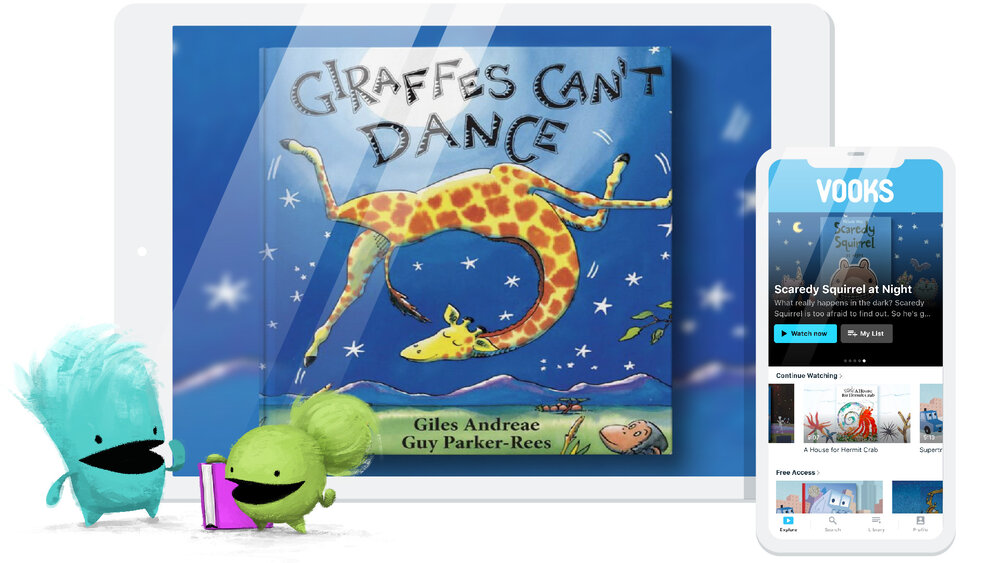
Vooks has produced beautiful, slow-paced video animated books, and offers a free year to educators (quite a snarky teacher video there, lol). The selection of books looks great and many are titles I have in my library of picture books. There is a process to request free access but I was approved quickly. The titles also have lesson plans with activity suggestions, ideas for questions and vocabulary cards. I definitely recommend Vooks for your toolkit; you can share books in sessions through screenshare.
I tried out Loom to show you some recent books I have used in teletherapy and a simple game that can be used for social and language targets in multiple teleconference platforms (i.e. through screen share or through remote cursor control). Email subscribers click through to see the post or see the video here.
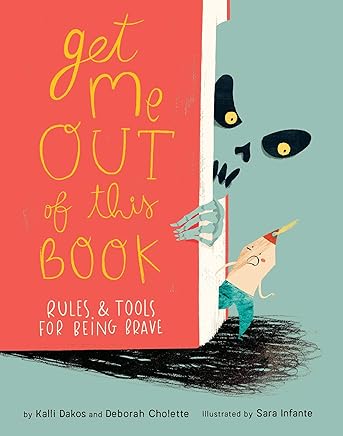
Hi folks- Online sessions continue to go well! -Managing fear/anxiety: We read and discussed a fun, engaging book - Get Me Out of This Book: Rules and Tools for Being Brave. Here's the vid if you want to review with your child and fam- we went page by page with me reading on EPIC! Books for kids: watch the video
We first talked about how we have learned about tools through Zones of Regulation®- -A Blue Zone tool perks us up if we are bored, sad, sick -A Green Zone tool keeps us in the green zone, feeling calm, happy, ok -A Yellow or Red zone tool calms if we are anxious or very afraid -And a tool can be an object, action or thought In the book a Bookmark (a wacky character like this is fun) gets anxious because of scary content in books, like pages with snakes or sharks. He learns three strategies: -breathe -make a plan -think a good thought I discussed with the boys that learning that you can change your thinking is a lifelong lesson. I have had to use these strategies constantly and I talked about how I had to coach my own mom (in her 70s now) when she sent me some worried texts recently. The boys understood why this discussion was important currently. The book makes clear in a note at the end that these three strategies are ones learned by Navy SEALs!...
Some notes:
-An almost middle-schooler in this group is often overly concerned/critical of materials being babyish when they are not, and appeared to enjoy the book thoroughly.
-Reading books interactively is a great activity for teletherapy
-If you don't already know about EPIC! it is a free (for educators, always) e-reading library. The book in question is here.
-This book could make a great story grammar map. It is also an example of metalinguistics, talking about elements of stories, and a kind of metanarrative (a story being aware that it's a story).
Sites like ABCya are filled with possibilities when we stop and consider what makes them potentially "Speechie" (see FIVES criteria). Ask yourself:
-Is there an inherent language process in this activity (e.g. categories, cause effect).
-What kind of conversations can I have with students that are NOT prompted by the screen (e.g. a description, commenting)
We've got categories, naming, the potential to make sounds corresponding to each instrument, later possibly finding songs where particular instruments are prominent and discussing them, looking at the language of lyrics, considering the narrative of songs, I could go on...
This site would be useful regardless of whether your could give remote (cursor) control by having students verbalize choices as you screen share.
Here are some other examples from this site: The Calendar Game: categories of activities, temporal concepts, following directions, executive function ABCYa Paint: Create a story, follow directions, draw vocabulary words Input/Output Devices: Describe by function and have awareness of how equipment is being used in the telepractice process Latitude/Longitude Treasure Hunt: Sync with curriculum concepts and spatial reasoning. Make a Treehouse and any other "Make a" game on skills pages: Describing, integrating parts into a whole, pair with a book like in this case If You Give a Pig A Pancake which involves a treehouse, also see Create a Car paired with If I Built A Car (lots of opportunities for complex IF sentences)
This is just a sampling from the "Skills" page. I hope you'll continue looking at this and other sites through this kind of language lens for telepractice opportunities- I didn't even mention the specifically targeted word games available by grade.
Note: there are ads on this site unless you go premium but I encountered only one pre-activity ad while writing this post and it seemed one I would use for discussion (a cool toy).
Recently I was trying to get a copy of a book, Sally Gets A Job, that would align with a vocabulary set from one of my favorite apps, WWP-Vocabulary. The set featured good Tier-2 words such as skill, operate, career, successful, earn. Sally, dog hero of one of my favorite series, seemed a great match.
A quick search on Boston Public Library's website revealed that the book was right at my fingertips, free, via their connection to Hoopla, an electronic media service. Hoopla allows you to view books on a laptop or your iPad after signing in through your public library, if this service is offered to you locally.
So, this is just a suggestion to check out your library website's resources for picture book therapy materials. They may vary, of course (mine has connections to lots of picture and other books through Overdrive, but not Tumblebooks, which you may have), but probably offer you some great options of free materials!
Also, don't forget, EPIC! Books for Kids has scads of picture books, free for educators.
So I made a thing. I have a free packet available on Teachers Pay Teachers describing the foundations and many examples of one of my favorite strategies: pairing picture books with apps for contextualized language intervention.
I usually capitalize that phrase because it is the title of a presentation I have done at ASHA Convention and other places with different versions (I like to call them sequels) since 2012! And guess what, if you are coming to Orlando, there will be a worldly version there! This session will be focused on building semantic/world knowledge, language tied to social studies concepts, and situational and social self awareness based on comparing our daily lives with that of other cultures:
In any case, I am happy to keep spreading the word about this strategy, which offers a balanced approach to using technology along with other materials, and mirrors across books and apps the techniques of co-engagement and stacking activities around a context (in pre and post-book fashion). I hope you will check out the free packet and please leave me a rating! My stars are looking kind of empty, with this being my first endeavor on TpT. Thanks!
The Olympics start this week! The associated topics of sports and geography are great ways to engage students around language objectives. I discovered the free book for iPad Dino Olympics, created by the makers of Puppet Pals. The app is an interactive exploration of different dinosaurs' strengths and weaknesses when competing in Olympic events; it has delightfully silly animations that are extended and further contextualized when students tap on the screen.
In terms of language development, the book is a context for targeting:
-categorization (winter vs. summer events or ones which are easy/hard for the dinosaurs)
-connecting to the concept of multiple intelligences (in Social Thinking® parlance, different kinds of smarts, though it is the dinos' bodies, not their brains, that impact upon their success)
-labeling actions and using causals, "thinking with your eyes"- e.g. observing that Apatosaurus is not good at luge because his long body makes him bounce off the curves of the track.
-I also used this book with a post-activity of creating a "luge course"- a gym scooter on the floor makes a good simulation of this and planning obstacles for the course via sketching a "future picture" is an executive function activity (see the work of Sarah Ward and Kristin Jacobsen).
ASHA Convention was quite a production in Los Angeles this past week. I wanted to share a few snippets from my own presentations as well as some tech tie-ins from others', so I will be posting those over the next week or so.
My session Setting up the Sequel: Pairing Picture Book Series & Apps to Contextually Address Language Objectives focused on using picture book series along with apps for pre- or post-book activities. One key idea is that we can use narrative teaching strategies and other language scaffolds in the process of using both books and apps.
I presented some ideas about working in context within interventions, including the following:
Context allows for easier planning and semantically/narratively deeper intervention.
Contextualized language intervention is supported by studies such as (Gillam et al, 2012): “signs of efficacy in an intervention approach in which clinicians treated multiple linguistic targets using meaningful activities with high levels of topic continuity.”
SLPs should maintain “therapeutic focus” (build skills and strategies) within meaningful context- book series are one way to approach this (Ukrainetz, 2007, Ehren, 2000).
We can analyze series for characteristics between books (or apps) that lend themselves to language interventions.
One series I reviewed was the Sally sequels (by Huneck, available with your free educator account in the app/website Epic! Books for Kids. The "Speechie" characteristics of this series include that they are simple narrative action sequences that can also be told at higher levels of narrative (see stage model in this article and this figure), they include many different settings, figurative language, and opportunities to scaffold cognitive verbs--Sally the dog "thinks about" many different things, decides, realizes, discovers and so on. Books like these that give many openings to language elicitation--where the illustration might prompt more verbalization to go beyond what the text states--are also good therapy tools. In the same way, apps that have language-neutral visuals without a lot of talking or noise are good candidates for our use. Take the Toca Life series (with a Farm, Vacation, School, Office, City and Town, Stable and Hospital) as one that has embedded language opportunities with categories in each scene, opportunities to demonstrate actions and create stories.
Toca Life: City pairs well with Sally Discovers New York (Huneck)
An additional main point of this session is that stories can be told in many different ways (see the developmental sequence link above) and found almost anywhere. Since we were in Hollywood and talking sequels I provided a tie-in to "bad" sequels and analyzed them with different narrative forms. Check out this "climactic" (strangely boring and seeming to affect only the 10 people they cast in the film) clip from Speed 2, and an analysis via Story Grammar Marker's 6 Second Story™, which we can use to scaffold a kernel of conversation:
Consider therefore how we can use different levels of narrative development to scaffold elaboration using fun and motivating contexts such as film clips as well.
Gillam, S. L., Gillam, R. B., Reece, K., Nippold, M., & Schneider, P. (2012). Language Outcomes of Contextualized and Decontextualized Language Intervention: Results of an Early Efficacy Study. Language, Speech & Hearing Services In Schools, 43(3), 276-291. doi:10.1044/0161-1461(2011/11-0022)
Ukrainetz, T. A. (2007). Contextualized language intervention: Scaffolding PreK-12 literacy achievement. Pro-ed.
Ehren, B. J. (2000). Maintaining a Therapeutic Focus and Sharing Responsibility for Student Success: Keys to In-Classroom Speech-Language Services. Language, Speech & Hearing Services In Schools, 31(3), 219-229. doi: 10.1044/0161-1461.3103.219.
Make Social Learning Stick! How to Guide and Nurture Social Competence Through Everyday Routines and Activities by SLP and social cognitive specialist Elizabeth Sautter is a book all clinicians working with students with social learning and executive functioning challenges should have on their shelves! The book synthesizes the work of some greats in the field--Elizabeth herself, author of the Whole Body Listening Larry series, The Incredible 5-Point Scale creator Kari Dunn Buron, Leah Kuypers, author of Zones of Regulation, Emily Rubin of SCERTS®. executive functioning guru Sarah Ward, Michelle Garcia Winner of Social Thinking® and play expert Pamela Wolfberg-- into a practical how-to guide to teachable moments across the day. The book provides suggestions for structuring activities and scaffolding language and cognition at home, in the community, and around special events such as holidays. The goal of the book, above all, is to "make social learning stick" by emphasizing the power of the milieu and thus to maximize generalization of skills.
The book begins with a brief overview of cognitive factors in social learning, including sensory processing, regulation, language and theory of mind, but wastes no time in getting to its purpose: presenting functional suggestions of activities to build "social smarts" across daily events. These include themes such as starting the day, getting ready for school, meal preparation, play, chores, and other daily routines. Community themes target moments for learning while at the mall, supermarket, grocery store, restaurants, and other locations.
Each theme features talking points about "hidden rules" or expected and unexpected behaviors for the situation, as well as integration of "job talk" that "helps the child take ownership and become more willing to jump in and complete the task." For example, when asking the child to check the weather so as to plan for the day's events and clothing, one can say "You be the weather reporter." Also within each themed page are suggestions of activities and discussions that can help the child build observation skills, situational awareness, conversational language, organization and self regulation, among other areas.
The latter section of the book contains helpful gems: a glossary of social cognitive language, rationale for some of the evidence-based practices espoused in the book such as milieu teaching and social narratives, and visual strategies such as the 5-point scale, sample visual schedules, and conversational supports such as a web of "Wonder Question" starters to help the child come up with questions to ask other people (a sampling of these forms can also be found on the book's website).
To remain "on message" for this blog, as I reviewed the book I found many possible simple technology tie-ins. Technology, after all, is part of our "everyday routines" that the book promotes as context for social learning, and using technology can make visuals and information more accessible, as well as ease the process of creating visuals for children. Some examples:
Being the "weather reporter" as referenced above can be facilitated with an app such as The Weather Channel or simply asking Siri, "What's the weather?"
Visual schedules can be easily made with apps such as Pic Collage or Keynote (as can 5-Point Scales, as I outlined last week).
Asking kids to "match the picture" of a completed task or chore can be made more explicit by marking up the picture with Skitch.
Essential and frequently used pictures or visual supports can be saved to an album in the Photos app or as PDF to an iBooks collection.
Activities such as discussing the layout of the supermarket to promote executive functioning can be made more visual through a quick diagram in an app such as Doodle Buddy.
and so on...
For SLPs and others working with students with social learning challenges, this book can serve as not only an essential guide within parent training and consultation, but also contains many points that can shape our own therapy activities and use of teachable moments! The book can be purchased through Autism Asperger's Publishing Company.
Over the coming weeks, some colleagues and I will be reading and discussing the book Hyperbole and a Half by Allie Brosh. Stemming from her popular blog of the same name, this book is a funny exploration of childhood, dog ownership, and other experiences through the author's writings and drawings. SLPs and educators might be interested in the unique and amusing narrative style and view of the psyche. Brosh's posts about her own journey through depression were noted to be extremely insightful when originally published on her blog, and are featured in this book. Despite this more serious content, the book is hysterical (this will be my second read--the first had me looking weird on a plane while shaking with laughter). Many of us could use a lotta laughs after this dismal winter.
In the words of the author:
This is a book I wrote. Because I wrote it, I had to figure out what to put on the back cover to explain what it is. I tried to write a long, third-person summary that would imply how great the book is and also sound vaguely authoritative—like maybe someone who isn’t me wrote it—but I soon discovered that I’m not sneaky enough to pull it off convincingly. So I decided to just make a list of things that are in the book:
Pictures
Words
Stories about things that happened to me
Stories about things that happened to other people because of me
Eight billion dollars*
Stories about dogs
The secret to eternal happiness*
*These are lies. Perhaps I have underestimated my sneakiness!
How to join in:
-Buy the book. Using the iBooks or Kindle app is an attractive option as this is somewhat of an impromptu "club" session and we'll be starting today, covering about 2 chapters a week.
-Join in the discussion on Twitter by searching for and following the hashtag #slpbks. Yes, you need to be on Twitter. But of course it's ok to just "lurk." I hope to see some of you there.
For a preview of the first chapter, I'd recommend watching Allie herself reading "Warning Signs"-- a look back at her own development and "unexpected behaviors" as a child. Such as eating face cream.
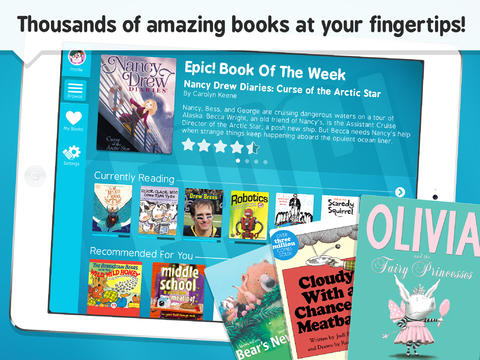
Check out Epic!- Books for Kids (FREE), an eBook library of picture and chapter books that can be used to present language-enhancing books in interactions with your students. Epic! offers thousands of narrative and expository books from major publishers such as HarperCollins, Scholastic and National Geographic. The app offers features facilitating an engaging presentation of a book to a group of students via an iPad, including zoom in/out to page and "read to me" audio available for some books.
After downloading the app, be sure to register for an educator account, which you can do through the app or on this page.
Epic! features a number of books I have used for language development over the years, and I have been finding other great options through the app. For example, the books Scaredy Squirrel and Scaredy Squirrel Makes a Friend by Melanie Watt offer the following "Speechie" book features:
-A narrative structure featuring problem, reaction (or attempts to solve) and conclusion
-Many expository elements presented in an engaging, fun way, e.g. animals Squirrel is afraid will bite him, sequences and connections between items and their functions.
-Text features such as diagrams and flowcharts that are helpful for scaffolding understanding (and seen in textbooks that students must grapple with in their classrooms)
-Contexts to explore social cognition strategies such as Zones of Regulation and the CBT paradigm of risk vs. opportunity (i.e. reframing anxiety-producing situations as opportunities to learn).
-Potential to screen-shot illustrations and pair with Strip Designer to make comic strip conversations about the character's thoughts and perspectives.
In my presentations on this topic I often include this reference that is very on point regarding the utility of this app:
The act of reading books aloud interactively and using scaffolding to support children’s use of more advanced syntax, vocabulary and critical thinking is itself an activity which addresses language development (Beed, Hawkins, & Roller, 1991).
SpeechTechie is my take on simple and interactive technologies you can use in language lessons and interventions. Enjoy!
Interested in learning more? I am available to conduct professional development sessions, including via webinar. If you'd like to work with me to design a presentation or consultation for your school or organization, please check out the "Work with Sean" page on this website.
Sean is a MedBridge instructor for several courses (avail. Feb 2018). Click to join MedBridge at a discounted rate for high-quality online PD and CEUs. A wide variety of courses are available for SLPs.
Visit and "Like" our Facebook Page
Follow SpeechTechie on Twitter for updates!
Thanks, Guys!
Click on the badge to explore a ton of great blogs!