Showing posts with label AI. Show all posts

Thursday, September 18, 2025

Helpful Literature on AI and SLP

I was recently asked to do a training session for Ventura County SELPA on AI applications for SLPs- it was a great time! In addition to talking through many examples of how to use ChatGPT for content generation useful in therapy and workload functions, including imagery, along with other tools, I had done a literature review on ethics and AI in speech and language pathology. Along with ASHA's literature and other journals, it seems there had been only a handful of studies or peer-reviewed articles on this important topic! But I found a great one: Stench of Errors or the Shine of Potential: The Challenge of (Ir)Responsible Use of ChatGPT in Speech-Language Pathology (Hanna & Yana, 2025). 

That title! Go ahead and read us to filth so we don't make big mistakes using AI! 

The authors provide a great summary of errors they have witnessed in clinical settings, and I summarized it further in the session:

The article is behind a journal paywall but perhaps use your university connected folks to get a look at the whole piece. 

This was an enjoyable, compact 3-hour session we did remotely, with lots of interaction with the clinicians. If you have any interest in the session for your district or group, please let me know (sean at speechtechie dot com).

Saturday, January 18, 2025

An Actionable Idea for Magnetic Poetry

My sister has started a fun family tradition of playing games after Christmas Dinner. This year she rolled out Ransom Notes, in which each team is given an array of magnetic words, a tray, and a situation for which to construct a message. Hilarity ensues as all work to craft sentences with limited vocabulary. Though I don't yet have the game, I realized this could be translated to readily available magnetic poetry interactives online such as the original. The game description gives you a number of starters that could be used in a therapy session, such as "Explain to a child how giving birth works" (I wouldn't use that one but some other school situation, like a dance) "Tell someone you've clogged their toilet during a party" and "Ask a child in the airplane seat behind you to stop kicking." Also, here's a great way to use ChatGPT: ask it to create a list of embarrassing situations for teens, and voila, you've got a whole slew of game prompts.


Friday, April 12, 2024

Create songs on a topic

Suno AI is a fun tool which will generate a song for you if you provide a simple prompt, such as a genre and topic. Sign in with your Google account and you can create a number of songs for free, and they are easily sharable by link. 

I first played around with Suno by musicalizing a funny story (at least funny to me and my friends). Last year when having a gathering to watch Eurovision, I had a full fridge of things for the party. My friends discovered that I had put (briefly) a defrosting ham for Mother’s Day the next day in a pan on a shelf below a table in the kitchen. So I’ve been teased since then about “floor ham.” I told Suno to “make a pop song about ham left on the floor.” That was the entire prompt, I didn't need to write any lyrics, but Suno has a custom mode where you can have more control over what ends up in the song.

Suno created this song. Seriously, it's a bop. I do apologize to any vegetarian readers.

Suno also created a fun song about nouns for me which I used with a student. The web or mobile version (just go to the website in your browser) will also display the lyrics to the song. Suno is a fun way to add engagement to any curriculum topic or to play with narrative language. 

Friday, April 5, 2024

Tailoring and Modifying ChatGPT Results to Create Quick Content

Last month, ASHA Leader featured a helpful article, Using ChatGPT to Create Treatment Materials (Price, Lubniewski, Du) providing great examples of prompts to ChatGPT for creation of sound-loaded paragraphs. Key to the article is the idea that what is returned will need to be filtered through your clinical expertise to create a usable material.

I have found that this process is still "quick." Recently I have been using a student's interest, in this case, cooking shows, to work through comprehension of paragraphs. We use strategies such as noticing and breaking down elaborated noun and verb phrases and also visualizing, with light application of the Visualizing and Verbalizing methods (structure words and digital squares in place of the "felts"). Though Lindamood-Bell provides quite a bit in terms of content with visual imagery for free, I have wanted to cater the content more to his interests and use subjects like Ina Garten.


Here you can see that the original return contained too much complex vocabulary, so you can use the chat aspect of the tool to continue refining. After simplifying the vocab, I asked it to detail a specific recipe like lemon chicken, then needed to ask it to simplify again, and ultimately did some editing when I pasted it into a Google Slide for a more usable experience.

You can see the full progress of my chat with ChatGPT here.

Friday, March 8, 2024

Goblin Tools

Working with teens and young adults and interested in showing them how to use an AI tool that helps them be more independent? As this free (and committed to remaining free) site proclaims, "goblin.tools is a collection of small, simple, single-task tools, mostly designed to help neurodivergent people with tasks they find overwhelming or difficult." The site is powered by generative AI, specifically OpenAI's large language models, which basically means it can understand and produce prompts written in natural language. It currently features:

Magic To-Do: enter a task and tap the magic wand to have it broken down into smaller, manageable steps, along with the option to estimate time for each step and the task as a whole.

Formalizer: enter casual language to get a suggestion of more formal language (or a wide variety of "tones" in a drop down) e.g. for writing an email.

Judge: receive feedback on the tone of inputted text

Estimator: stand-alone tool providing estimate of time for a task

Compiler: "compile my brain dump into a list of tasks"

Chef: 

Here's an example of a task I put into the Magic To-Do (please don't ask why I have to do this task):


I hope you find this tool useful for your students, clients, maybe associates, partners or spouses, or yourself!

Thursday, November 16, 2023

GratiTools (and say hi if you see me at ASHA2023 in Boston)

During this time of year, we often do the obligatory lessons about gratitude that go well with the thanksgiving holiday. From a language perspective, practicing gratitude involves reflecting, listing and describing life events, so it is a therapeutically relevant context for sure. However, I always emphasize that there is science behind it for self-regulation, and we should try to practice it all year round! Here's a good video to detail those points.


If you have students that need an engaging angle, Mr. Thankful made me (and them) smile. While the gratitude here is over-the-top, it provides a view of what the practice writ large looks like. At the end (2:02) there is a bit of religiosity, so stop it before that to avoid this particularly in public school settings.


As I have been writing about AI tools, thanks to Tony Vincent of Learning in Hand for sharing this simple tool that generates a thank you letter based on a simple list, which would make a great writing activity in the coming week.

Also, I'm at ASHA this week in my hometown- please say hi if you bump into me. I will be presenting in a MasterClass on innovations in telepractice, MC27: Telepractice Innovations: Current, Emerging, and What We Wish For. There is an additional fee to attend, but I will be sharing my slides here following the session. 

Friday, September 29, 2023

Using ChatGPT for Lesson Planning Ideas

I have posted here recently on the therapeutic uses of Generative AI for language activities, and have recently been impressed by the results of using it to obtain modifiable content useful in sessions. ChatGPT is great at coming up with elaborated lists. I am working with a student on self-advocacy in the community, an an example prompt to ChatGPT is as follows:


Not necessarily usable as a read-through with a student, but certainly a place to start in thinking about role-playing situations. 

With another student, the need for intervention in social problem solving has been recently highlighted. The student benefits from a hook, and is very into the pop/rap artist Lil Nas X. While the artist's racy content would never be a good context for our work, the student is allowed to listen to some songs at home, and the artist could certainly be useful as a kind of shell of a story.  An activity I am conducting is teaching the basics of problem solving using language structures such as OR, i.e. "we could do this OR this." See the books on problem solving by Shure

Searching on Chat GPT, I originally obtained a list of too-mature problems e.g. Nas is harrassed on social media because of his identity as a queer artist. Modifying the prompt with "kid friendly," I received a delightful set of problem solving scenarios. 


Again, these are usable with some creative modification. The outfits scenario, for example, could be solved with a drawing activity of creating several outfits. My student is not so into drawing, so we are using Pic Collage's new online web editor (pick blank canvas) along with a separate tab search-copy-paste for Google Image PNGs (no background as in the rainbow skirt) and the "remove background" feature. 


We are doing a similar activity for a client I supervise who has a big interest in Sonic the Hedgehog!


Thursday, August 17, 2023

Music LM

Proceeding from some ideas about the role of music in speech-language therapy (and social coaching), back in the spring I did some activities with MusicLM. This tool is available from Google's AI Test Kitchen, which is free, though you currently have to sign in with a personal Google account and may have to wait a short while to be approved. With Music LM you "Describe a musical idea and hear it come to life." More specifically, type an activity, setting, situation, style, mood, or specific musical instruments, and it will create several examples for you.


The language and/or social interaction can come in through providing schema with the above italicized connections to music, using this as a conversational "add a thought" type activity, and allowing flexibility- as maybe your clients will think of possibilities that fall out of these categories. You can also be more structured and gear a lesson around, say, emotional vocabulary.

Friday, April 14, 2023

A Quick Activity with Chat GPT

I have been doing clinical supervision at BU for a few semesters now. It's such a rewarding experience to work with the graduate students in their first clinical in-house experiences. I have a student who is working on a lot of semantics and language-based literacy activities with her client, including teaching story grammar as an organizational structure. We have been talking about building activities in context with pre-book and post-book activities, and her client is interested in planes and aviation. I suggested to her this book and this activity: what 10 words do you think ChatGPT will come up with that go with ___ (in this case, airport). The process of asking them to predict what the AI may say is an associative activity, and then the results will likely bring about new concepts and vocabulary.

See one of my favorite articles, The Magic of "Once Upon a Time": Narrative Teaching Strategies for more on pre-, during-, post-book (or other context-based) activities. 


Friday, February 3, 2023

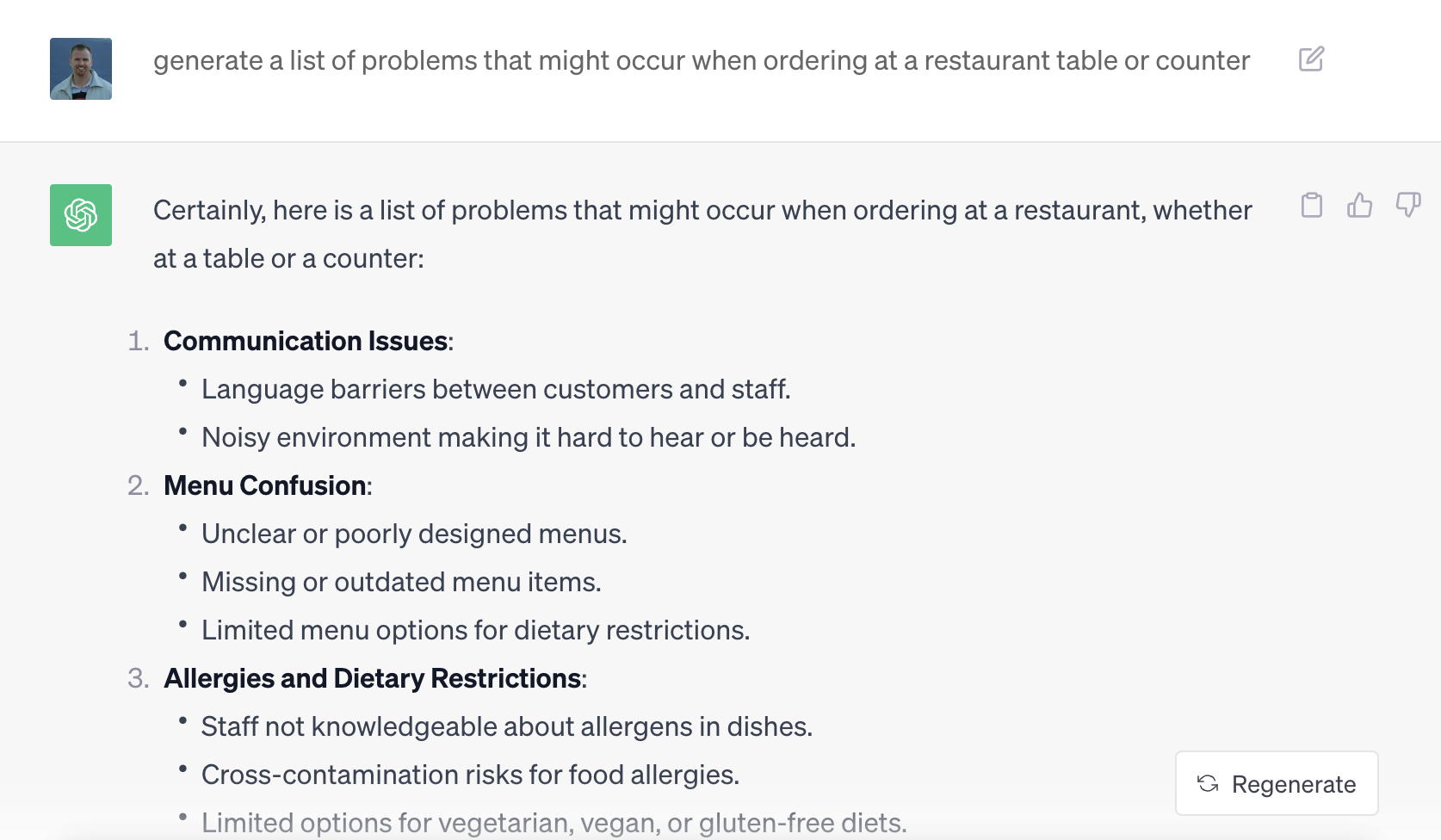
ChatGPT- maybe a series?

You probably have heard of ChatGPT, a free Artificial Intelligence chatbot that you can ask for all sorts of information. Yes, we have concerns about it being misused in academia, and I know it may be already blocked in your school building, but thought it would be worth exploring in this space. Ditch that Textbook (one of my faves) provides an exploration of it here, along with suggested classroom uses. For a specific SLP take, check out Bonnie Singer's post here.

For an initial idea on how ChatGPT can be useful in language intervention, let's consider vocabulary- which can be helpful to put in context! I have a student whom I see individually, though these ideas can be incorporated in groups. He loves Pokemon and comes each week with a card he has earned--these turn out to be rich sources of useful Tier 2 vocabulary, and it is motivating for him because he is always asking about the words. As we know, students need multiple exposures to new words, so we use semantic and structural techniques in reviewing and revisiting the words, including making this Jamboard (available through your Google apps):


-Vocab "stories" are so easy to co-create with students. Following the student's interest, we searched for a feline Pokemon and copied a PNG. 

-You can use the Background feature to search for Google Images (how we quickly took Sprigatito from Chicago, the student's choice, international to Venice).

-Sticky notes were used to create the loose "story" (also scaffolded with Story Grammar Marker®)

Back to ChatGPT. Access this by clicking the link, click try ChatGPT, login with your Google, and pose a query. In our case it was "Write a story about a feline Pokemon using the words...(vocab above, another opportunity for the student to generate the words)." The cool and engaging result was as follows:


Yes, wordy, but with opportunities to scaffold comprehension and yet more vocabulary. The student was amazed and so was I!


.