Showing posts with label current events. Show all posts

Friday, April 21, 2023

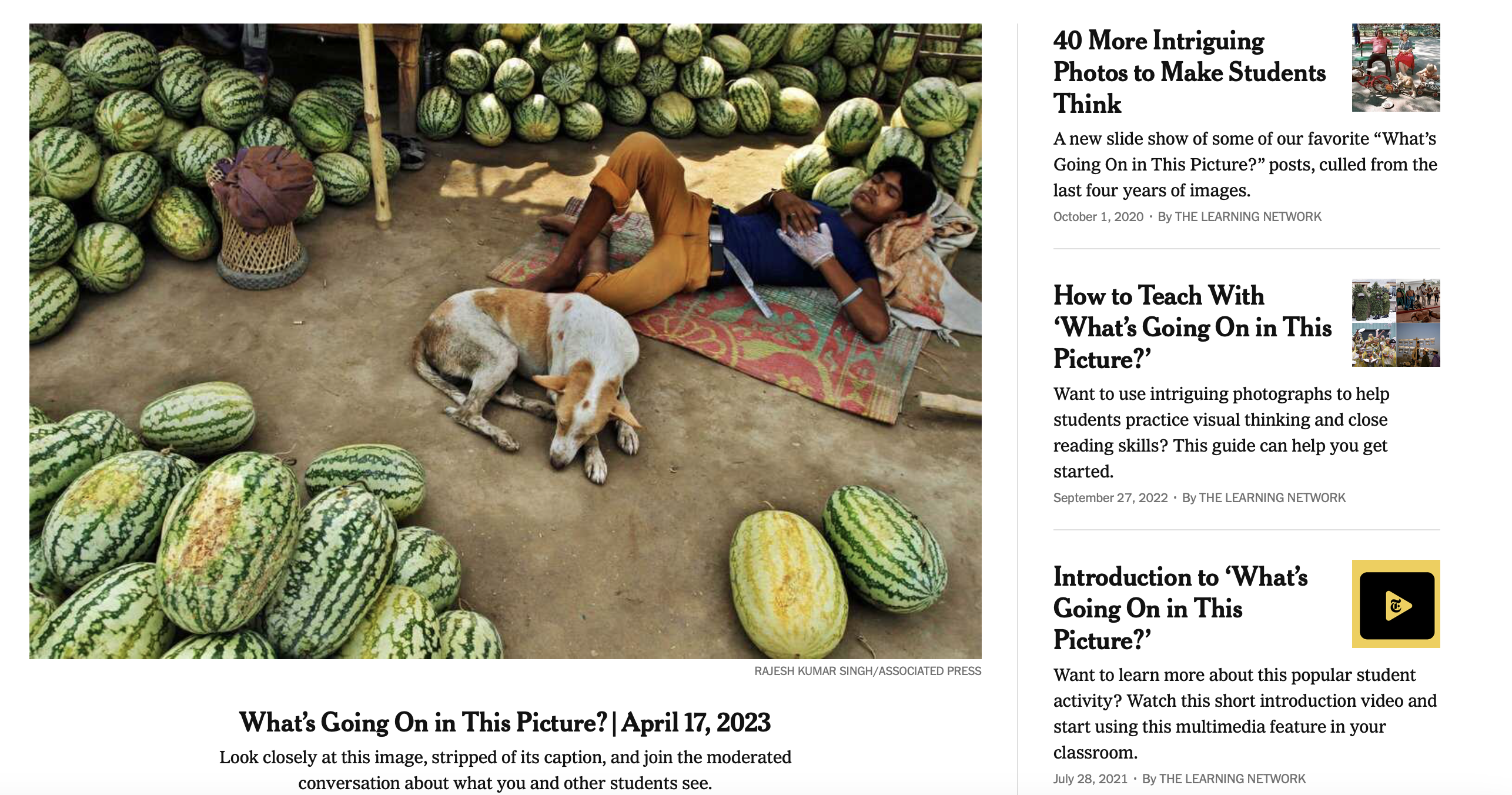
What's Going on in this Picture?

Any tech resource that is simple, reliable, with content worth more than one visit, and that will tie in with instructional strategies is one to save on your list. Such a thing is the New York Times' What's Going on in this Picture? The site provides a weekly Interesting Image and instructional tips.


You can consider using this content with:

-Instruction on story grammar, as each picture can be used to form a story

-Visualizing and Verbalizing® strategies

-tie-ins with forming inferences and Social Thinking® concepts such as Thinking with the Eyes 

-Thinking Routines such as those outlined here

The content here is also great for many age levels including adults!

Friday, May 27, 2022

Again

Nine years ago I had the opportunity to visit Sandy Hook and work with some educators along with Pamela Ely, the director of the Ely Center, LLC where I work, and Sheila and Maryellen Moreau of Mindwing Concepts. We talked for the day about supports in the area of social interaction and narrative language that might be helpful for the students trying to move on with their lives in the face of unspeakable events. I hoped that day that we might never have to grapple with such a horrible situation again, but here we are, and somewhat more depleted given the past few years.

Like you, I am sure, for me it is hard to find much to offer this week, but we can find strength in helping others.

A few ideas:

-Email someone offering a resource. This post, a PDF you have that has helped you, a journal article, whatever. Reaching out and helping is a tool.

-The Happiness Lab has a great episode on Languishing. I picked up a few ideas from it and this week taught a lesson based on one of the concepts discussed. You can listen to The Happiness Lab on Spotify or Apple/Google Podcasts.

-Newsela has a small kit related to the events in Uvalde. I used the piece on "Ways to stay calm when you're feeling stressed" with a group this week. 

-NYT has a robust resource list for talking and teaching about these events.

-Here's my self-care toolkit from this past winter.

Take care, folks.


Thursday, March 10, 2022

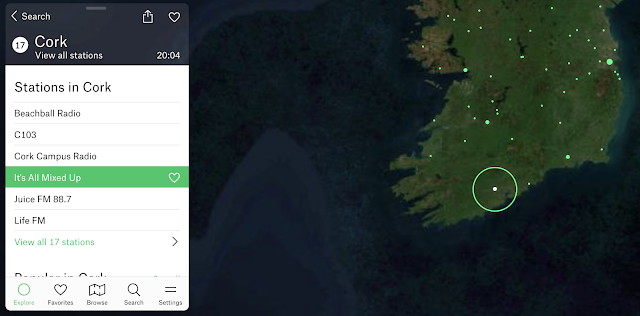
Radio Garden

Flowing a bit from my last post (context is your friend), Google Experiment Radio Garden is worth a therapeutic visit. Your students will think it's just a chill moment, but secretly it can be a great way to practice having them call out:

-Continents and then countries
-Responses (conversation/comments) to what they hear
-Characterization of the language (nonverbal aspects such as tone etc) and type of music you may hear. Music genres are a category and can connect us with peers!

Why not pair this with looking up a current event from the country you "visit" for narrative/expository comprehension? 

Now more than ever, it's important to foster global awareness.

Oh, and Happy St. Patrick's Day, here's my homeland:


Thursday, October 21, 2021

Consider This: Meaningful Current Events

I'll wrap up Consider This with an example from this week. I have a student who is a Red Sox fanatic (a husband too) and they are of course in the playoffs. This story surfaced and has a lot of nuance to it, with targets regarding story grammar, perspective taking (which is really just story grammar times 2, 3, or however many people are involved), figurative language and body language. For brevity's sake I'll let you check out the link and the couple of videos there for the context.

This is the kind of scaffolded discussion that could take place via telepractice or in person, but I happen to be working with this student online. Zoom's annotation tools are a bit clunky (easy to click off your text box and need to make another, you scroll down on a webpage and they stay in the same place), but did the trick. If this annotation drives you nuts, it's an easy shift to Google Slides to toggle between tabs and use your preferred story grammar frame. In this case we just took some notes as we discussed; it's almost always better to provide visual support, which aids in working memory, processing, and further formulation.

Not to alienate any Astros fans, we did go on to note Correa's response to the incident was pretty positive, though there may be some nuance there too.

To go from the specific to more general, using current events can:

-activate students' interests

-provide contexts for story and expository text structure (and microstructure: sentence formulation and vocabulary)

-within the former, open doors to targeting social cognition, emotional vocabulary, or Zones®

My biggest trick in this regard has been keeping up with news myself, listening to the local news radio station, NPR, or subscribing to digests from local news sources to skim. As I've mentioned before, newsela is also a great go-to. I also have a student who loves CNN 10, a video resource.

Interested in professional development for your department, school, or organization? Sean is booking in-person or remote trainings for the 2021-2022 school year

Thursday, June 4, 2020

Another week...

One of my students in a group session this week shared as his "low" that he is upset by all that is going on with racism and injustice in America and that "it's another layer on top of the layers the country has been dealing with." A wise way to put it.

I'm working on what I can do in my own community, but I wanted to work to elevate black voices in my sessions this week, in ways that might help my students process current events and also be goal-oriented. A conversation about race is about many things, but partly thoughts and perspectives and experiences, all wrapped up in narrative language. Experiences start with the landscape of action (Bruner, 1986) or ability to describe actions in the story as well as character and setting, but relate to the higher level landscape of consciousness/theory of mind ability to describe thoughts, feelings, plans and perspectives related to these events. Cognitive verbs such as think, know, remember, realize, guess also often form complex sentences as in I thought I should do something to help.

For a group of 4th-5th graders this week I read from Can I Touch Your Hair? Poems of Race, Mistakes And Friendship available on Epic! Books, reviewed here by Kirkus Reviews. The poems have a white and black student each reflect on planned topics for a poetry project, in the process sharing stories and embedded "thoughts" that often require some inferencing. I read the book in part and then made it available in the students' free remote access library available through Epic! As a post-activity we completed a discussion web of sorts with the students' contributing their understanding of some of the characters' thoughts as extracted from the narratives. The thought bubble visual is from Story Grammar Marker® and available in their downloadable icon products. (Note: Author has a contractual consultative relationship with Mindwing Concepts for provision of blog and presentation content, but receives no royalties should you buy their products) Typable thought bubbles as always are available through Google Slides in the shapes>callouts menu.


I was happy to see that this book was included in Epic!'s Start a Conversation about Race collection- if you are looking for material over this time.

And to make it absolutely clear, #blacklivesmatter, this week and every week.


Saturday, March 7, 2020

Helpful resources on Coronavirus (and hygeine in general)

In the past week, my students have had a lot of questions and comments about the Coronavirus outbreak in the USA.

On our part, working in a clinical private practice setting in which a social part of many sessions is eating a snack, we've taken steps including:
-Frequently wiping down surfaces with Clorox wipes
-Lysol spraying surfaces, doorknobs and fabrics
-Ensuring hand washing or sanitizer use before and after snack, and between sessions for clinicians
-Mitigating risk by avoiding things like playing card-passing games while having snack (hand to mouth and cards and passing cards in games like Apples to Apples).

ASHA has produced a good set of suggestions for clinicians and practice managers during this situation. 

Instructionally, you may be interested in using this ongoing situation as a context for building social cognition, situational awareness and even expository language:
-NPR has shared a great comic which serves as a sensitive social narrative
-Many of my students have shared disinformation within groups; this served as a context to discuss relying on facts (Social Thinking®'s smart guess/wacky guess concept). Encourage reliance on news sources rather than looking at random videos on YouTube.
-Brainpop's free movie on the topic can be explored with expository text graphic organizers or Ward/Jacobsen's STOP strategy for situational awareness.


-You can also discuss the narrative and social aspects of stories like this.

I myself issued a small PSA this week. I hope it's helpful for you, especially Swifties:


Stay healthy and calm out there!


.