Showing posts with label self-regulation. Show all posts

Friday, September 26, 2025

Explore.org

I find CBS Sunday Morning to be my first step in calming any Sunday Scaries, and this week they presented a lovely story on the website explore.org, which provides a large variety of nature webcams. The founder explained that he feels passionate about connecting people to nature as a kind of mindfulness tool.

I agree with that, and have written about webcams before, but this week's Fat Bear Week is a good time to check in. Put that on your calendar if you missed it (you have until 9/30 this year), but it is a celebration of the bears preparing for hibernation at Katmai National Park, and having kids vote and justify their reason is a good therapy activity. 

I found this week with a number of learners that visiting explore.org was a good way to practice making choices, regulating through calming content, describing setting and action for narrative language, and tying into academic skills in science and geography. 


Thursday, November 16, 2023

GratiTools (and say hi if you see me at ASHA2023 in Boston)

During this time of year, we often do the obligatory lessons about gratitude that go well with the thanksgiving holiday. From a language perspective, practicing gratitude involves reflecting, listing and describing life events, so it is a therapeutically relevant context for sure. However, I always emphasize that there is science behind it for self-regulation, and we should try to practice it all year round! Here's a good video to detail those points.


If you have students that need an engaging angle, Mr. Thankful made me (and them) smile. While the gratitude here is over-the-top, it provides a view of what the practice writ large looks like. At the end (2:02) there is a bit of religiosity, so stop it before that to avoid this particularly in public school settings.


As I have been writing about AI tools, thanks to Tony Vincent of Learning in Hand for sharing this simple tool that generates a thank you letter based on a simple list, which would make a great writing activity in the coming week.

Also, I'm at ASHA this week in my hometown- please say hi if you bump into me. I will be presenting in a MasterClass on innovations in telepractice, MC27: Telepractice Innovations: Current, Emerging, and What We Wish For. There is an additional fee to attend, but I will be sharing my slides here following the session. 

Friday, September 29, 2023

Using ChatGPT for Lesson Planning Ideas

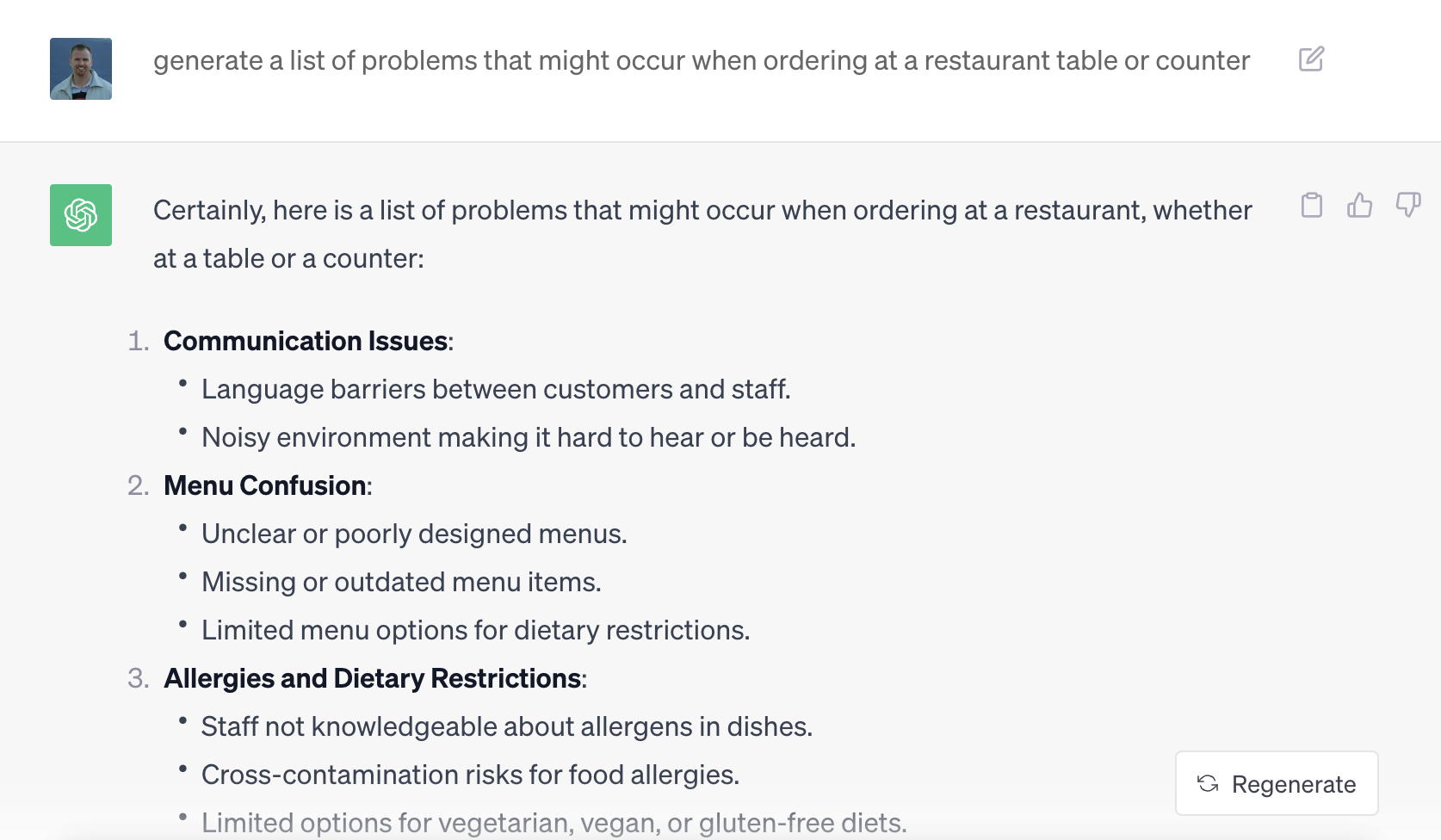
I have posted here recently on the therapeutic uses of Generative AI for language activities, and have recently been impressed by the results of using it to obtain modifiable content useful in sessions. ChatGPT is great at coming up with elaborated lists. I am working with a student on self-advocacy in the community, an an example prompt to ChatGPT is as follows:


Not necessarily usable as a read-through with a student, but certainly a place to start in thinking about role-playing situations. 

With another student, the need for intervention in social problem solving has been recently highlighted. The student benefits from a hook, and is very into the pop/rap artist Lil Nas X. While the artist's racy content would never be a good context for our work, the student is allowed to listen to some songs at home, and the artist could certainly be useful as a kind of shell of a story.  An activity I am conducting is teaching the basics of problem solving using language structures such as OR, i.e. "we could do this OR this." See the books on problem solving by Shure

Searching on Chat GPT, I originally obtained a list of too-mature problems e.g. Nas is harrassed on social media because of his identity as a queer artist. Modifying the prompt with "kid friendly," I received a delightful set of problem solving scenarios. 


Again, these are usable with some creative modification. The outfits scenario, for example, could be solved with a drawing activity of creating several outfits. My student is not so into drawing, so we are using Pic Collage's new online web editor (pick blank canvas) along with a separate tab search-copy-paste for Google Image PNGs (no background as in the rainbow skirt) and the "remove background" feature. 


We are doing a similar activity for a client I supervise who has a big interest in Sonic the Hedgehog!


Tuesday, July 25, 2023

Gartic Phone

Over the spring semester, in several of my social learning groups, we were experimenting with games that allowed for association, storytelling and humor (essentially the same skills used in improv games, which I also like to use non-digitally). It was helpful to use some free versions of games as opposed to the excellent games offered by Jackbox because a) I could hand over the reins to graduate students practicing independence and b) the students could perhaps use the games at home with family or friends at no charge and c) the varied ways the students needed to "join" the game allowed for practice in situational awareness and self-regulation. 

I found many great examples (and yes, some less-great) from this post on The Gamer, but I wanted to highlight Gartic Phone here. Gartic Phone is a "telephone" type game in which players label drawings successively in increasingly silly ways that become removed from the original meaning. There are a variety of ways to play including creating a story, such that it is worth revisiting over multiple sessions, and it is easily playable in 10 minutes once kids get the hang of joining. I often use bit.ly to shorten the URL for joining for games like these. Remember that these games can be worth spending time with pre-loading game-play "moves" that will help everyone to feel successful and/or revisiting results (I often screenshot to remind them of what went well).


Saturday, January 14, 2023

Revisiting Breathwork with Breathwrk

I can't say enough about the app Breathwrk and what it has done for me, and taught me personally. I've mentioned I struggle here and there with SAD and some other layers. Whether thought- or experience-driven or sometimes just an undercurrent of mismatched energy, using breathing techniques to regulate is very effective for me, and as you can see in this app, backed by science. Try it yourself for free and I'd actually recommend this as exactly the kind of app that is worth paying for a full subscription. 

Additionally, Breathwrk can be very useful clinically. Whether teaching Zones of Regulation® tools or Autism Level Up (see the writeup, instantly usable, as well as many resources at the website), an approach strongly and specifically endorsed by the autistic community, who identify emotional and energy regulation as a priority, breathing techniques as regulation tools can be solidly in our wheelhouse as SLPs. The app has a fun, visual approach to practicing techniques that clients can access elsewhere. I especially appreciate the brain-based science blurbs that accompany each technique. Breathwork can be quick and simple as a tool that may appeal to those who are not so into lengthier mindfulness exercises, and can also complement these.

Friday, May 27, 2022

Again

Nine years ago I had the opportunity to visit Sandy Hook and work with some educators along with Pamela Ely, the director of the Ely Center, LLC where I work, and Sheila and Maryellen Moreau of Mindwing Concepts. We talked for the day about supports in the area of social interaction and narrative language that might be helpful for the students trying to move on with their lives in the face of unspeakable events. I hoped that day that we might never have to grapple with such a horrible situation again, but here we are, and somewhat more depleted given the past few years.

Like you, I am sure, for me it is hard to find much to offer this week, but we can find strength in helping others.

A few ideas:

-Email someone offering a resource. This post, a PDF you have that has helped you, a journal article, whatever. Reaching out and helping is a tool.

-The Happiness Lab has a great episode on Languishing. I picked up a few ideas from it and this week taught a lesson based on one of the concepts discussed. You can listen to The Happiness Lab on Spotify or Apple/Google Podcasts.

-Newsela has a small kit related to the events in Uvalde. I used the piece on "Ways to stay calm when you're feeling stressed" with a group this week. 

-NYT has a robust resource list for talking and teaching about these events.

-Here's my self-care toolkit from this past winter.

Take care, folks.


Thursday, May 19, 2022

Minecraft Education Edition

I have previously written about using contexts like Minecraft without getting into the thing itself. I've come around on this a bit and next time I'll talk about some simple uses of Minecraft (creative mode, I am still not interested in having kids kill each other in a game), but recently I discovered I CAN USE MINECRAFT EDU!

I had heard about Minecraft EDU for years but, not having an .edu email address, couldn't access it. I have been supervising at Boston University this semester and discovered my email address (plus having a Microsoft account at BU, so you need this too) was the key, as it probably is for many school-based clinicians reading this blog. MC EDU has many created "worlds" that are structured and relate to school topics, so are a nice place to start. 

So, if you have a .edu email, head first to MC EDU and sign in to create an account. From there, I find Minecraft most navigable on an iPad- simplified controls and such. For the EDU activities you'll need the free iPad app. Explore the worlds and see what you might like to use. They are not all amazing, but I highly recommend the very well-done world called The Mindful Knight. Through this activity I grabbed the attention of a student who I have struggled to help with practicing self-regulation strategies, and through several of the "quests" learned about the value of deep breaths and presence (e.g. Five Senses noting of things in the environment).

The deep breathing exercise is practiced by navigating the Knight to an elevator, with great visuals.

I apologize that this is still somewhat of a complicated resource to reach, with the necessity of the .edu address and MS account, but there's a work-around. Look on YouTube for "Mindful Knight Minecraft" and you'll find gameplay vids like this one that can make for good lessons, too!

Friday, February 4, 2022

Be Zen with Your Tabs

It seems as though everyone is starting to exhale and feel a bit of optimism again after a disruptive turn in the pandemic this January 2022. It seems a good time to take stock and continue to use our tools to keep ourselves productive and feeling purposeful!

One of my tricks is around windows and tabs- it's important to be mindful of how many you have open. First of all, having a huge array of applications, windows, and tabs within your browser open is overwhelming and isn't conducive to focus. Here's a great post on Zen Habits about this issue. Additionally, having all this stuff open is taxing on your computer's memory and even power, so you may find it moving more slowly. Take a few minutes a few times each day to close those tabs that are making your brain go all over the place, pulling your focus and/or causing you some anxiety. 

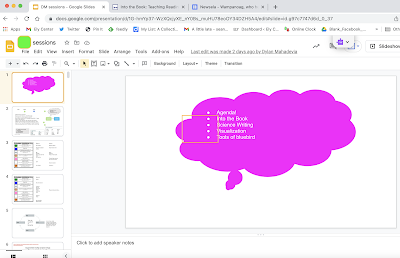
One strategy I like to do--it may sound counter to the above but is really an organizational/prep strategy, so, regulating-- is to set up upcoming sessions in a window or windows along with any resources I plan to use- whether it be a telepractice or in-person session, as I am currently doing both. For tele it is helpful to have the tab you will want to go to first be the active one, as in Zoom it will be the one visible for screen sharing.


For this session you can see the (1-1) student's Google Slides deck, with agenda and other activities like practice with the EET, reading comprehension practice we are doing with Into the Book, and a Newsela article we would work through with Story Grammar Marker®. Student done, close the window!

Stay Zen, folks!

Friday, September 24, 2021

Consider This: Videos about Mindfulness

Mindfulness should be considered right in the SLP wheelhouse. It a) is evidence-based, b) promotes self-regulation which underlies executive function, academic performance, social communication and c) practicing and discussing mindfulness encompasses expository language and metacognition (talking about thinking). 

Through the mandated teletherapy period and beyond, I have found videos about mindfulness to be particularly useful as they are visual, prompt practice, and serve for post activities

Check out this example:


It's great. Well-paced, specific, promoting a strategy that can be used without the video at other times, and an example of an abstract, complex idea. In using this I have needed to recast my students' understanding of it: Being present helps you be in the moment to pay attention, but also regulates your emotions away from thinking/feeling about the past or future. There's much personal narrative that can come from exploring this as well as descriptions of what we notice in the moment (often a complex sentence formulation prompt as well with any cognitive verb).

In addition to other videos by the Partnership in Education, you can explore ones for various age levels from Cosmic Kids, MyLife, or Headspace.

It's a good idea to do this kind of activity with regularity (it need not take more than 10 minutes) or in a series as mindfulness is really about developing a practice.  I always think of it as a toolkit (aligning with models like Zones®), so it is also wise to find videos that promote different strategies such as presence, above, deep breathing, gratitude, etc.

Interested in professional development for your department, school, or organization? Sean is booking in-person or remote trainings for the 2021-2022 school year

Thursday, June 10, 2021

Lessons from COVID, Part 1: or, An Anxious Extrovert SLP Faces a Pandemic

As we close out what was frankly an annus horribilis for everyone, naturally including anyone in education or health care, I'd like to do so as positively as possible and share some lessons learned. This might be two posts or one, or six or twelve, I am really not sure. It's a topic I thought of submitting for an ASHA presentation but really didn't have the energy (I submitted a different topic), so here goes.

The beginning of the pandemic was a fear-fueled spring into action: figuring out how to become an actual telepractioner instead of a tech-informed consultant, and then sharing that information in post after post and not a few presentations. Then we settled into the long day-to-day post-fall and that energy...lagged. The days got shorter and my SAD closed in, bringing with it a lot of irrational dread that was tinged with actual threat. My husband returned to teaching HS Math (mostly AP) in an impossibly hybrid fashion, working 12 hour days to figure this out for some engaged and many indifferent students, all of whom were probably doing their best to get through this. Meanwhile, I settled into continuing teletherapy, feeling trapped in our house and isolated, except for the blessed days I got to leave and go do some in-person work at schools. Nevertheless, we both carried UVC lamps to sanitize our computers and stripped our school clothes into a dedicated hamper in our back hallway. 

Things got better. Vaccinations brought hope, mine coming undeservedly early in my case, due to my SLP license. I cheered on as my parents, my husband, family members, friend by friend (I kept track of who was on what shot mentally), then my students got their protection. Still, I languished through the late winter and spring and just now am REALLY able to see and enjoy the light, and I'm looking forward to the future.

Having started to experiment with coloring and drawing, I'm seeing the light- and am a work in progress.

I didn't get COVID. My husband didn't get COVID. I think, anyway. I certainly got tested enough. The few people I know who did had mostly manageable cases. Lucky. I kept working, another blessing; I know it's a privilege to be able to work from home. Still. It sucked, didn't it?

I'm working to put the year behind me (self talk: let go and move on) but I know I can focus on the things I learned, and share them. So let's start with mental health. It's important, and something like this can break it a little, and you can piece it back together. Some tech tools that helped me:

1. Therapists need therapists. Get help if you need it. I had my own experience with telehealth re-upping with a therapist who had helped me in the past. Doxy.me works great! In all probability, help will be more available to all in the future given the doors opened and competencies developed during this tough time. 

2. Tech-based fitness tracking facilitates exercise and mental health; the pulse goes up and so do the levels of good chemicals in your brain. Luckily, using exercise as a tool was always an inclination of mine. I enjoy it. Even without a gym to go to, I managed to keep that up, being creative about workouts and learning how to use exercise bands, which, now back to the gym regularly and comfortable maskless, I still use on some days as an alternative. I actually lost weight during COVID. I thank my Apple Watch, which I finally caved and ordered last August. The rings are a thing:


3. Tech-mediated mindfulness, breathing and coaching: Always a fan of tools like Calm, most recently I tried out Breethe, Aura and Breathwk. I ended up going with a yearly subscription to Aura because of the combination of high-quality meditations along with CBT and coaching tracks. The CBT pieces have even given me great ideas for lessons with my students, as these concepts relate so much to narrative language, social cognition and self-regulation. 

ABCDE (Antecedent Event, Beliefs, Consequence, Dispute, Effect) pretty much mirrors story grammar models. 

I also have found Sanvello useful- this app has instructional paths and meditation tracks among other features, and is available for free with some health insurance plans.

Further caving and getting AirPods has made me full-on Apple and has somehow made developing the habit of meditation more attractive. Having the voice in my head be music has also been a nice substitute at times. I should give a shout out to our network of Echo Dots about the house that has cut through the unsettling quiet, though I have listened to way too much SiriusXM The Blend (aka The Bland, aka Adele At All Times).

Breathwk is super cool and SLPs should definitely know about it, given our connection to respiration and a number of its uses (e.g. voice, fluency, self-regulation). The app presents different breathing techniques based in science, a training sequence, and all presented with great visuals and haptics (e.g. a vibration for inhalation). You can get a lot out of this app with its free options but I may spring for the annual as I am very curious to learn more. 


The above have all been great tools in helping me step forward back into "normalcy," and I hope these tips help you and yours in some way!

Wednesday, May 5, 2021

Flowing with a Theme

I have spent a lot of time in recent presentations talking about establishing flow (the positive psychology concept) for ourselves and our students by incorporating interests. Flow can also be considered to refer to contextual flow within or across sessions which has been shown to facilitate efficacy. So, to that end, a few activities I whipped up on the theme of May the Fourth Be With You (International Star Wars Day); I realize this is past but you can always observe later, or next year!

Read and discuss Darth Vader and Son (Jeffrey Brown) or another in this series. Many of the single panel cartoons are also usable from Google Images. These cartoons are great context to do picture interpretation of what is implied in the scene, or discuss humor (hyperbole, irony).

Take a field trip to Star Wars: Galaxy's Edge in Google Earth (just search for the location in either Disney park). Students can take turns "driving" via cursor control or in person, make observations and comments, or look closely at the setting (enter Street View by dragging over the Peg Man...my group observed a family wearing masks and inferred the shot was taken during the pandemic). You can also look for POV videos of any of the rides on YouTube which can lead to further observation, commenting, and narrative language.

Use a post such as this one to read about Star Wars' droids (like the EET, they prompt green-group, blue-do, but also stories). My group is now sketching our own droids in Jamboard. I love that Set Background> + > Google Image Search lets you quickly set a contextual background and show students how to do so also.

This post on Instagram also had us doing some fun picture interpretation. "Oh, what do you think the artist wanted to focus on here...?" prompting discussion of characters, setting, representations (e.g. Kylo Ren in Last Jedi with no helmet on looking more human).

Finally, this clip of Yoda generated some good discussion and critical thinking about growth mindset:


Friday, December 11, 2020

Scaffolding complex and abstract language through Google Slides: an example

I have mentioned here many times that I am often seeking to target language and social competencies through a self-regulation lens of late. An example of a context for this is the great series of videos from the Stop, Breathe and Think-Kids app, now available free in full on YouTube in this playlist, see the right sidebar for full list. 

SBT-K presents mindful activities in a playful, narrative way and so is very useful for elementary students. As SLPs we can think of mindfulness cues like these as potential narrative/expository prompts (What did you think of when it said...?), connections to metacognition and self-regulation/social strategies such as Zones of Regulation®.

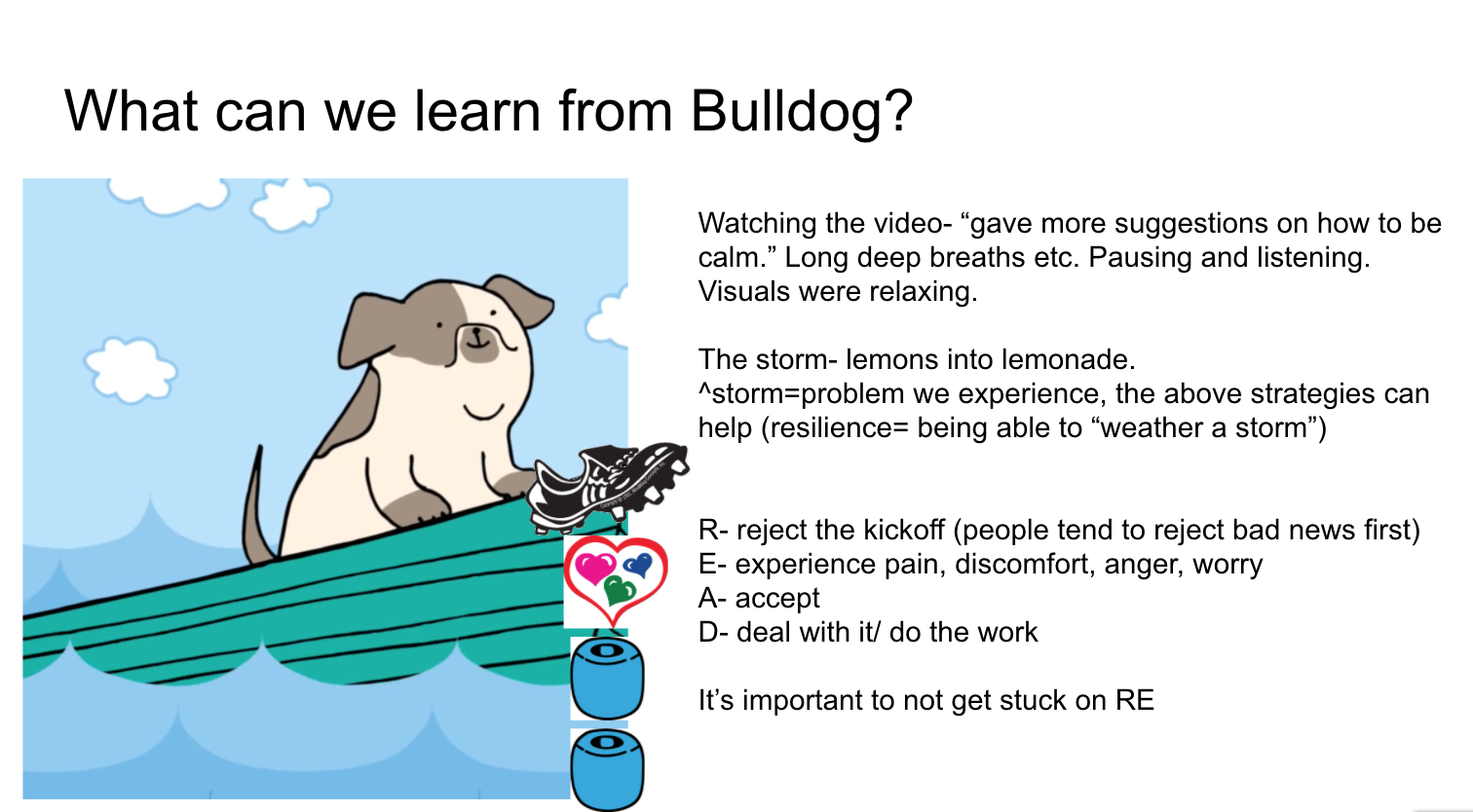
For a particular client these past several weeks, I have been using this series as a "flow" and creating in-the-moment visuals in Google Slides while scaffolding complex/abstract/how-can-you-use-this kind of language. A few examples are below, and remember that screenshots/screengrabs are your friend!


The READ acronym is one that I learned from MY therapist- how lucky I am to have a super solution-focused CBT support during a pandemic, and it corresponds well actually to story grammar (icons from Story Grammar Marker®)


As I mentioned, these are visuals we formed as the student, my graduate intern and I had this conversation over teletherapy; it occurred to me in the moment that many mindfulness activities are focused on lists, which are organized expository thinking!


Friday, November 20, 2020

Calm

This is a good week to remind you of a simple resource to help you and your students. I have written about Calm before but it seems it is more important than ever. We all need to take moments each day to reset and breathe.

Calm can be used as an app on mobile devices or Apple TV but I find that the web interface offers more, and particularly like the Scenes feature which can be used for free. To do this:

-visit the website, linked above.
-login with Apple ID, Facebook or create an account with your email.
-in the left sidebar click Scenes and choose a scene. Some are more setting-based and some more ambient visuals. You can choose the volume of the audio that goes with the scene.

-click Calm in the upper left corner, then the scene itself (not the featured activities) to see it full screen.

Calm could be a great resource to help you meditate and breathe a few moments if you enjoy visuals for this kind of activity.

For students, same. Also consider a post activity for some of the more contextual visuals. What place you have visited did this scene remind you of (could then go there with Google Earth and get some more narrative/description from the students). What do you think you would experience with your 5 senses if you were actually in this location?

Saturday, November 14, 2020

ASHA Pandemic Pangs

Facebook's "Memories" feature is sometimes not so great during a pandemic. You look back with a bit of a pang, right? "I can't do that this year..." This is best channeled with some hope, particularly with good vaccine news this week, toward better days ahead. But still, seeing past ASHAs kind of hurt. I'd always be prepping to present and seeing friends and colleagues I'd only see there. One very packed room I presented to in 2013 did kind of make me go "Ew," given current contagion.

This year, I was invited by SIG 18 and was set to present "Play on Words: Thoughtful Uses of Game-Based Apps and Resources in Language-Based Interventions." That presentation doesn't really exist as of yet (maybe next year), but I thought it might be helpful to share my presentations, along with one on telepractice with Amy Reid and Nathan Curtis, from the last three years. Hopefully there might be some ideas in there that will help you in your work currently.

Here's the link.


Food for thought: a lot of what I have presented in the past has revolved around iPad apps and these have been less relevant in the emergency-telepractice era. However, Apple has just released new Macs with their own M1 Silicon chip (as opposed to previous Intel-made chips) and THEY WILL RUN IPAD APPS NATIVELY. Kind of a game-changer for teletherapy, methinks. I will be getting one soon as my Mac is circa 2013, anyway. 

Friday, November 6, 2020

A focus on gratitude

Gratitude is a Thanksgivingy theme...but actually much more than that. Much research has supported that practicing gratitude as a form of mindfulness can be self-regulating and cultivate positive neural connections. 

In addition, gratitude has a language lens as it:

-relates life experiences

-can/should be practiced as a "listing" activity

-expresses causality

-can be pushed to the abstract i.e. being grateful for intangible things.

Over this and coming weeks I will be using this and this video in discussion activities.


Both are accessible, short and visual. Videos from Headspace are very useful that way, and the second has a bit more of a near/practical hook that will help a lot of my boys access what could be perceived as a dismissible touchy feely message.

As a follow-up activity, Jamboard is a motivating visual way to have students journal, share, describe and discuss. Here's my model:


Thursday, October 29, 2020

Mindfulness "fails" for narrative and "thinking talk"

Metacognition is all wrapped up in our language, social and executive functioning. To read a great explanation of how, see this article from Singer and Bashir (1999), two of my faves in the field. 

Additionally, right now everyone, absolutely everyone, needs strategies for regulating ourselves. I have made it a focus in many of my sessions since March. 

Recently Chris Hemsworth of Thor fame, so familiar to most of your students, put out a number of humorous videos showing that mindfulness failure is all part of the process (note that there are 6 videos in the series/playlist).

These vids are useful in a number of ways in speech and language sessions:

-mindfulness exercises are a great entryway to metacognitive talk: "during that I was thinking about..."

-you can pair these with actual exercises, see MyLife, Stop, Breathe & Think Kids, Calm, Zen Den, or MindUp's Curriculum

-each video is actually a narrative snippet: character, setting, initiating event, plan, actions/attempts, conclusion, so is good for mapping

-I actually used these in some lessons about humor for a student struggling with humor use, teaching about types of humor including play (Ward/Jacobsen's "same but different" concept is related to that type of humor and these videos)

Friday, September 25, 2020

Comedy Wildlife Photography Awards Website

The 2020 Comedy Wildlife Photo Awards finalists were announced recently, a development I saw on the news (you never know where you will get therapy ideas). Based on the BBC story about the awards, I found 4 or 5 photos that made for great therapy activities. For example, I used this one...

via BBC

...with a high school group in Google Slides as a way to review the concept of thinking with the eyes (Social Thinking®) but also as a review of Zones of Regulation®, starting with the Blue Zone (well, going whole-part-whole as is often recommended for teaching schemes like this). Interestingly, the order of details written here is in order of how the group members processed the picture. Again, this serves as a reminder that Google Slides makes a damn good therapy tool as a multimedia flipchart. 

Following this, I discovered that the Comedy Wildlife Photo Awards website itself is a goldmine, containing past winners and years of finalists. As you likely know a right click on any image gets you a fair-use-copyable for educational activities, but don't republish any images, especially not for commercial use. Be aware also that you will want to screenshot or save images rather than free-exploring the site itself with students. Wildlife occasionally flips the bird or engages in other inappropriate behavior.

Thursday, August 27, 2020

A Mental Health Moment for Me (and Apple Watch)

I tried to take most of August to chill and recharge. Life didn't totally let me have that, but whattayagonnado, we're all dealing. I got to the Cape (my own state) and with a COVID test satisfied Maine's requirements to venture there. The test was not relaxing, but Maine was. I hiked the Beehive at Acadia, something I said I'd never do due to a rather debilitating fear of heights, not a great thing for a hiker to have. Good growth mindset lesson I shared with all my students, though!


Somewhere in between those I cashed in a bunch of Bitcoin that had been languishing, going up and down. It was close to my original investment and I was sick of looking at it, and thought it would justify my splurging on an Apple Watch.

I had avoided buying an Apple Watch, mostly due to thinking it was going to be all about Notifications. I dislike Notifications; they are the enemy of mindfulness. But a few friends and some research convinced me (an Apple Guy at heart, anyway) that it was helpful for exercise motivation and tracking and that it might help with mindfulness and stress reduction "during this difficult time" (sigh).

Exercise has truly kept me sane since March. But the Apple Watch is providing even more motivation. I added a friend who shares his workout activity and I enjoy comparing (competing). I kept social media notifications shut off on the iPhone and those mirror on the watch, so the only extra pings I get are those reminding me to be active, which is helpful.

Apple Watch kind of gameifies activity with the use of rings. 

My Rings now...

Red is Move, based on a calorie target you set, Green is Exercise, based on being in your target heart rate (measured by the Watch) for 30 min daily, and Blue is Stand, standing for a minute or two 12 hrs of the day. I am annoyed by the tyranny of Stand, and it's causing me to put my laptop on a shoebox during telepractice sessions. But the others I am getting used to, and I know now what kind of workouts fill the ring, etc. And for me, a workout always fills my brain with good chemicals and makes me feel calm.

I'll let you know about some other good apps for self-regulation (like Breathe) the next time, but let me know in the comments if you have faves. Talk to you after Labor Day, I'm squeezing some more summer next week (after therapy sessions and an all-day presentation). I hope all are doing well and weathering the uncertainties of opening school so far. 

Tuesday, July 28, 2020

Another example of pairing picture books and apps in teletherapy

I have previously mentioned I am a big fan of the Scaredy Squirrel (Melanie Watt) series that is helpfully available on EPIC! Books. Over a number of weeks I had my students in one group come to a decision on the order of reviewing and discussing the books in the series, which was good practice in expressing opinions and compromise. They find the books hilarious, so they are motivating (see the above link for some social cognitive analysis as well). I wanted to share a post-activity we conducted with the original book. Hoggan and Strong describe how narrative teaching activities can include "art" activities, which was what this was in essence. 

In the book, Squirrel is described as having constructed an emergency kit for all the unlikely things he is afraid of. So, as a group we created and shared emergency kits.

Here are the steps I followed:
1. Create a Google Slides presentation (and blank slide)

2. Use Insert>Image>Search the web to locate a "bag" for the kit, position and enlarge on slide.

3. Duplicate that slide for all in group (secondary click/right click on slide and select Duplicate). I put a text initial on each slide for each group member. Also click Share and make the presentation editable for anyone with the link.

4. Create a model (always), with same steps but using PNG in the search term which gives you transparent images (will look like they are over the bag, but this step is not necessary).

5. Present the activity and model and strong causals: I need iced coffee in the kit because I get Blue Zone in the afternoon. Also model how to insert an image or PNG (This provides good opportunity for following directions)


6. Copy the link and provide to group members in chat for the session (Zoom or Meet). Again, following directions. 

Here was one of the students' productions:


7. Have all work independently while chatting and then share. This is a good opportunity to use a clock, Sarah Ward/Kristen Jacobsen style, for time management.

Overall the activity provides great self-description opportunities, building of "people files" (Social Thinking®) and conversation.


Monday, July 20, 2020

Adapting Social Thinking®'s Levels of Independence for Teletherapy

I have previously discussed here how visual supports and displaying visual materials provide an important layer and level within the Continuum of Technology Integration (developed with Nathan Curtis of Waldo Country General) in both in-person and teletherapy sessions.


This Displaying/Discussing Visual Materials can support and scaffold: conversations, strategies, action plans related to communication.

One great visual and paradigm we have been using in teen groups is Social Thinking®'s 10 Levels to Living Independently, which with the right group just makes sense. Trust me, my message is not "YOU NEED TO DO EVERYTHING YOU CAN TO IMPROVE YOURSELF DURING THIS RIDICULOUS TIME." But, fact is these kids are spending more time alone, bored, and developing independence in managing themselves would sure be great for them and their parents.

So we have been using this model in a sequential manner along with other resources and discussion webs. Here's an example to check out, easily co-created during a conversation with Google Slides screen-shared. This model allows a lot of opportunities for parent communication and use of videos and other resources.


.