The movie Here comes out this week, reuniting Tom Hanks and Robin Wright with their Forrest Gump director Robert Zemekis. The movie is said to be experimental, with the camera fixed on one area to show a nonlinear story/stories that happen in a particular space across a broad range of time. Here is based on a comic and then graphic novel by Richard McGuire; both would be useful for reviewing with teens but the original comic is located, well, here. I could see this as useful for an activity in story mapping, BrainFraming (or other sequence graphic organizer), or timelining the events shown.
Friday, November 1, 2024
Friday, April 14, 2023
A Quick Activity with Chat GPT
I have been doing clinical supervision at BU for a few semesters now. It's such a rewarding experience to work with the graduate students in their first clinical in-house experiences. I have a student who is working on a lot of semantics and language-based literacy activities with her client, including teaching story grammar as an organizational structure. We have been talking about building activities in context with pre-book and post-book activities, and her client is interested in planes and aviation. I suggested to her this book and this activity: what 10 words do you think ChatGPT will come up with that go with ___ (in this case, airport). The process of asking them to predict what the AI may say is an associative activity, and then the results will likely bring about new concepts and vocabulary.
See one of my favorite articles, The Magic of "Once Upon a Time": Narrative Teaching Strategies for more on pre-, during-, post-book (or other context-based) activities.
Thursday, March 10, 2022
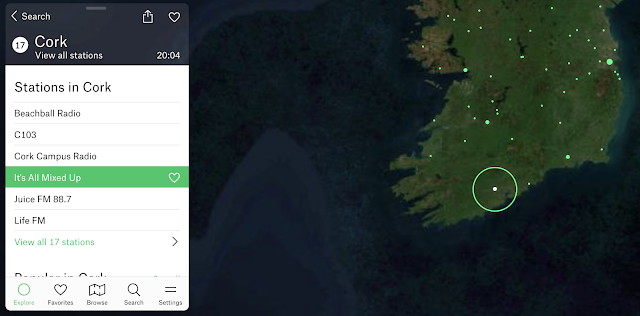
Radio Garden
Flowing a bit from my last post (context is your friend), Google Experiment Radio Garden is worth a therapeutic visit. Your students will think it's just a chill moment, but secretly it can be a great way to practice having them call out:
-Continents and then countries
-Responses (conversation/comments) to what they hear
-Characterization of the language (nonverbal aspects such as tone etc) and type of music you may hear. Music genres are a category and can connect us with peers!
Why not pair this with looking up a current event from the country you "visit" for narrative/expository comprehension?
Now more than ever, it's important to foster global awareness.
Oh, and Happy St. Patrick's Day, here's my homeland:
Thursday, March 3, 2022
Globle can become a cooperative group game
I have been a longtime fan of maps as therapy tools. They promote spacial description skills, situational awareness and (literal) world knowledge, and can be used to link to narrative and expository language.
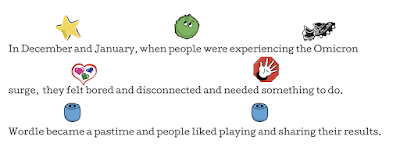
Let's start with Wordle though. A huge fad, one this Jeopadevotee has used to shore up his skills with the anagram category that didn't appear in his game...yeah, I am still in some kind of transitional phase. Anyway, I am not sure it is such a great therapy tool unless it is paired with a visual support such as searching for words with various forms (see same but different below), but it kind of has a story. Here related in Story Grammar Marker® icons:
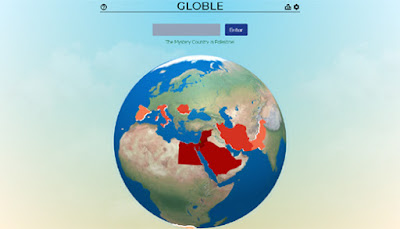
There have been many spin-offs of Wordle including one in IPA that SLPS would love, and Globle is one in which you guess the "country of the day." As mentioned above, for students working on building this knowledge, it's great to have a tab open for reference and research to help them make educated guesses. As I described to families of students I played with this week, "In a cooperative way we enjoyed an introduction to the game Globle, a variation on Wordle where we guess countries, get color coded clues back, and zero in on the day's target, therefore using thinking with the eyes, following the plan, and adding connected thoughts based on the info that we were receiving. The boys figured out Portugal quickly by building off each others' clues!"
Wednesday, May 5, 2021
Flowing with a Theme
I have spent a lot of time in recent presentations talking about establishing flow (the positive psychology concept) for ourselves and our students by incorporating interests. Flow can also be considered to refer to contextual flow within or across sessions which has been shown to facilitate efficacy. So, to that end, a few activities I whipped up on the theme of May the Fourth Be With You (International Star Wars Day); I realize this is past but you can always observe later, or next year!
Read and discuss Darth Vader and Son (Jeffrey Brown) or another in this series. Many of the single panel cartoons are also usable from Google Images. These cartoons are great context to do picture interpretation of what is implied in the scene, or discuss humor (hyperbole, irony).
Take a field trip to Star Wars: Galaxy's Edge in Google Earth (just search for the location in either Disney park). Students can take turns "driving" via cursor control or in person, make observations and comments, or look closely at the setting (enter Street View by dragging over the Peg Man...my group observed a family wearing masks and inferred the shot was taken during the pandemic). You can also look for POV videos of any of the rides on YouTube which can lead to further observation, commenting, and narrative language.
Use a post such as this one to read about Star Wars' droids (like the EET, they prompt green-group, blue-do, but also stories). My group is now sketching our own droids in Jamboard. I love that Set Background> + > Google Image Search lets you quickly set a contextual background and show students how to do so also.
This post on Instagram also had us doing some fun picture interpretation. "Oh, what do you think the artist wanted to focus on here...?" prompting discussion of characters, setting, representations (e.g. Kylo Ren in Last Jedi with no helmet on looking more human).
Finally, this clip of Yoda generated some good discussion and critical thinking about growth mindset:
Friday, April 2, 2021
Not Going Anywhere? You can still go places!
"Virtual field trips" can generate a lot of language and conversation. From spatial concepts about the globe to descriptive setting narrative work, providing a visual of a location can be a fun contextual experience.
Google Earth is of course a great resource for all of this, but if you'd like more of a guided tour, here are a few resources for you.
CityWalks walks you through the streets of international cities. You can choose to view the city pre-COVID to be less depressing! City Sounds are available on the walk, so you truly feel like you are there.
Drive and Listen provides a driving tour of global locations. You can speed up the car to go faster and the "listen" part allows you to listen to local radio stations!
Thursday, October 22, 2020
Google Earth's Spooky Spots Quiz
You know I am a Google Earth Geek. Always have been, but in this time it is nice to be able to use the context of "going someplace" to engage my students. Google Earth's quizzes (find in the Explorer captain wheel tab) provide very structured experiences with the interactive globe, posing questions, providing images that prompt observation and discussion, and popping you into an interactive window to "look around." With Halloween coming, you can use the Spooky Spots quiz through nine multiple choice questions (it doesn't matter if you or your students know the answers) bringing you to spots around the globe. The content is free of violence but mentions "The Shining" and "Rosemary's Baby" so probably best for 5th grade or above. As each question is posed, unlabeled placemarks would allow you to ask students to observe potential locations (e.g. "that one looks like its Colorado."). Once answered, you can use the interactive window on the left to navigate the space (oooh an abandoned amusement park near Chernobyl) and work on description and conversation. You may be interested in asking group members to get more information on one of the topics and report back to the group (Wikipedia is fine for general knowledge!).
Friday, September 25, 2020
Comedy Wildlife Photography Awards Website
The 2020 Comedy Wildlife Photo Awards finalists were announced recently, a development I saw on the news (you never know where you will get therapy ideas). Based on the BBC story about the awards, I found 4 or 5 photos that made for great therapy activities. For example, I used this one...
...with a high school group in Google Slides as a way to review the concept of thinking with the eyes (Social Thinking®) but also as a review of Zones of Regulation®, starting with the Blue Zone (well, going whole-part-whole as is often recommended for teaching schemes like this). Interestingly, the order of details written here is in order of how the group members processed the picture. Again, this serves as a reminder that Google Slides makes a damn good therapy tool as a multimedia flipchart.
Following this, I discovered that the Comedy Wildlife Photo Awards website itself is a goldmine, containing past winners and years of finalists. As you likely know a right click on any image gets you a fair-use-copyable for educational activities, but don't republish any images, especially not for commercial use. Be aware also that you will want to screenshot or save images rather than free-exploring the site itself with students. Wildlife occasionally flips the bird or engages in other inappropriate behavior.
Monday, June 8, 2020
Shortcut
Tuesday, May 26, 2020
A Model Lesson About Re-openings
-all students will need to utilize strong situational awareness in the community as we go forward, being aware of the restrictions and visual markers for social distancing etc.
-This plan is essentially a Five Point Scale and involves a lot of nuances, understanding why one phase is same but different (vocabulary from Sarah Ward and Kristen Jacobsen) from the previous and future phase etc, as well as many IF/THENs
-Any lesson about time is also an executive function lesson.
-and so on...
I did discuss this plan with parents beforehand, emphasizing that:
-I am encouraging students to initiate conversations with them about the pandemic and what restrictions mean within their family.
-Just because something is open or now "allowed" does not necessarily mean every family is going to go forward with that- also a lesson in perspective taking.
And naturally, I did not present this activity as in the video below, there has been a lot more "stop and discuss" e.g. before moving to the next category having students predict what falls in each phase.
Resources shown in this video/following up:
-Fair Play read aloud (skip the odd opening first 50 seconds)- this book was recommended by Michelle Garcia Winner in her book Thinking About You, Thinking About Me for the lesson about JustMe thinking, but is also a great establisher of the main idea connections between government and social cognition
-Reopening Massachusetts visuals (if you're in MA, or you can do a same but different lesson)
-A Kahoot for students to play with what they learned. Again, you can make a same but different one if not in MA.
Video model lesson
Thursday, May 14, 2020
A Fun Way to Explore Teleconference Social Behaviors (and another Discussion Web)
...school may be hybrid or more in the fall
...social distancing may continue for some time or have periods with flareups
...industries are discovering that working from home has benefits and some are making it the norm.
For these reasons, developing communication competencies for our sessions and beyond is an opportunity here! In my groups, we watched this amusing video (as far as I know available only on Facebook but you don't have to log in) and completed this discussion web with contributions from all.
See previous post about discussion webs as a way to scaffold complex language in teletherapy. In the process we also evaluated some of the behaviors shown and put them in a sequence from most to least expected (most distracting to others). This was a fun discussion and we were all able to acknowledge things we have done on Zoom that might have been "unexpected" and acknowledged our growth as well (self-awareness)
Monday, May 4, 2020
May the 4th Be With You
Training is a fun such clip.
You can use this clip in teletherapy to:
-Work on narrating or composing sentences about the story
-Use chat to have students write lines of dialogue, working on conversational language (see Anna Vagin's ideas about this)
-Guide a discussion web about a question like "What's something you had to practice to get better at?"